- eCom Email Marketer
- Posts
- 12 Unusual customer segments that drive serious revenue (+ How to actually use them)
12 Unusual customer segments that drive serious revenue (+ How to actually use them)
The retention playbook built from $200M in email and SMS revenue is here.
→ Unlock the Vault
Good morning, Chase and Jimmy here.
You're probably segmenting your email list by openers vs. non-openers, maybe by purchase history if you're being thorough.
That's not segmentation. That's just organizing your list into bigger buckets.
Real segmentation is understanding the different ways your customers engage with you – discount rejectors who only buy full price, one-product loyalists who repurchase the same thing every month, engagement-only subscribers who browse but never buy – and tailoring your messaging so it actually resonates.
Today we're breaking down 12 unusual customer segments that drive serious revenue and exactly how to use them.
Also inside:
✔️ What happens when 350 DTC operators stop posting and start comparing notes IRL?
✔️ Knowledge drop: Customers need to feel like they’ve won
✔️ Top agencies generate $16.70 per subscriber. Here's how they do it.
✔️ DTC wins: Danone acquires Huel in ~$1B deal
Let’s get into it.
What happens when 350 DTC operators stop posting and start comparing notes IRL?

In 19 days, downtown Austin becomes home to the conversations that actually move the needle. Commerce Roundtable is 70% sold out, and the final tickets are moving fast. On April 20-21, you'll get hands-on workshops, actionable insights, and a room full of operators who actually get it.
Winning with TikTok Shop: Real strategies driving social commerce revenue
The Real Story Behind Scaling Cuts Clothing: From startup to hypergrowth
AI That Actually Works: Cut the myths, get the practical applications
Meta Ads & Creative Strategy: What's converting right now in 2025
How to Get 20B Views on YouTube: The playbook for massive organic reach
Building Your Operating System: Frameworks for predictable growth
Navigating a Male-Dominated Ecosystem: Honest leadership conversations
$200K in Giveaways Live on Stage: Yes, really
Sunset Rooftop Happy Hour: Downtown Austin views, real connections
We've sold out every event for the past three years. This one's heading in the same direction.
Knowledge drop:
If customers can’t recognize progress, they won’t stick around. Jimmy explains how defining clear “win states” turns uncertainty into momentum (and drives retention.)
12 Unusual customer segments that drive serious revenue (+ How to actually use them)
Most brands think they're doing segmentation. They've got their "openers" and "non-openers." Maybe they've split their list by purchase history. And they think that's enough.
It's not.
That's like owning a Ferrari and never getting it out of first gear. You've got the tools. You're just not using them the way they're meant to be used.
Real segmentation isn't about splitting your list into two or three buckets. It's about understanding the different ways your customers engage with you and tailoring your messaging so it actually resonates. When you get this right, engagement goes up, revenue goes up, and you stop wasting sends on people who were never going to convert anyway.
Here's how to move beyond basic segmentation and actually use it to drive retention and growth.
Why most segmentation strategies fall flat
The problem isn't that brands don't segment. It's that they segment on the wrong things.
Splitting your list by demographics (age, location, gender) doesn't tell you much about how someone wants to hear from you or what they're likely to buy next. Even splitting by "engaged vs. not engaged" is surface-level. It tells you who's opening emails, but not why they're opening them or what they're actually looking for.
Here's what actually matters:
Purchase behavior: What they buy, how often, and how much they spend
Engagement patterns: When they engage, what they click, and what they ignore
Customer lifecycle stage: First-time buyer, repeat customer, lapsed, at-risk
Value perception: Do they wait for discounts, or do they buy at full price?
When you segment on these behaviors, you can send messages that feel relevant instead of generic. And relevance is what drives action.
The 12 segments most brands ignore (but shouldn't)
Most brands segment on surface-level stuff like purchase history or engagement. But the segments that actually move the needle are the ones based on specific behavior patterns that tell you exactly what someone needs to hear from you.
These aren't your typical "VIP customers" or "engaged subscribers" buckets. These are microsegments built around how people actually shop, what motivates them, and where they are in their relationship with your brand.
Here are the 12 segments that consistently drive the most revenue when you get the messaging right:
1. Discount rejectors
These customers buy at full price and don't wait for sales. They're motivated by newness, exclusivity, or quality, not by saving 15%. When you send them discount-heavy emails, you're training them to expect promos they don't actually need to convert.
What to send them: Focus on new arrivals, limited editions, exclusive bundles, or early access to product launches. Skip the promo codes entirely and lead with what's new or scarce instead.

2. One-product loyalists
They buy the same thing over and over, and they're not browsing your site for alternatives. They know what they want, and they come back specifically for that one product. Your job isn't to get them to explore more (yet). It's to make repurchasing as frictionless as possible.
What to send them: Make reordering dead simple with one-click reorder links or subscription offers. Once that's established, you can gently introduce adjacent products without pushing too hard or overwhelming them with options.

3. Risky first-time buyers
They just made their first purchase, but they're not loyal yet. Right now, they're evaluating whether you're worth coming back to, and your post-purchase experience is what determines that. If you go silent or immediately hit them with another sales pitch, you've probably lost them.
What to send them: Send onboarding emails that reinforce their decision to buy from you. Usage tips, product care instructions, and a clear return policy all build trust in those critical first few weeks. This is where loyalty gets won or lost.

4. High AOV, low-frequency buyers
They spend a lot when they buy, but they don't buy often. These are considered purchases, not impulse buys, and they don't need (or want) weekly promotional emails pushing them to shop again. Respect their buying rhythm or risk annoying them into unsubscribing.
What to send them: Focus on brand storytelling, product care tips, and content that reinforces the value of what they already bought. Build the relationship between purchases instead of constantly asking for the next sale.

5. Engagement-only subscribers
They open emails, click links, and browse your site, but they haven't purchased yet. They're clearly interested in what you're doing, they're just not convinced enough to pull the trigger. Hitting them with aggressive sales messages will probably push them away instead of converting them.
What to send them: Educational content that answers their objections before they even ask. Social proof, customer reviews, product explainers, and comparison guides all work here. Build trust without being pushy, and let the content do the selling.

6. Seasonal-only buyers
They show up once a year (holidays, back-to-school, summer) and disappear the rest of the time. You can't force them to buy off-season, but you can make sure you're top of mind when their shopping window opens again.
What to send them: Start the conversation early by teasing seasonal collections weeks before everyone else floods their inbox. Remind them why they loved you last time and give them a reason to come back before the peak rush hits.

7. Promo-only buyers
They only buy when there's a discount, and they'll sit on their cart until you send them a coupon code. Full price? Not interested. You're not going to convert all of them into full-price buyers, but you can shift some of them toward better behavior over time.
What to send them: Transition them slowly with bundles, loyalty rewards, or value-based messaging that reframes the purchase as smart instead of cheap. You're playing the long game here, not trying to flip them overnight.

8. Recently lapsed high-value customers
They used to buy frequently or spend a lot, but they've gone quiet. Maybe they found a competitor, maybe life got busy, or maybe they just forgot about you. Either way, these are high-value customers worth winning back before they're fully gone.
What to send them: Personalized win-back emails that reference what they used to love about your brand. A "we miss you" message with a meaningful offer (not just a generic 10% off) can remind them why they bought from you in the first place.

9. Multi-category explorers
They're browsing across different product lines, which means they're curious but maybe overwhelmed by options. They're interested in multiple things but haven't committed to any of them yet. Your job is to help them decide without adding more confusion.
What to send them: Quizzes, comparison guides, or curated recommendations that make decision-making easier. Help them narrow down their choices instead of showing them even more options.

10. Subscription-adjacent buyers
They buy the same category repeatedly but haven't subscribed yet. They're already exhibiting subscription behavior (regular purchases, same product), they just haven't formalized it. The friction might be fear of commitment, uncertainty about pausing or canceling, or just not seeing the value clearly enough.
What to send them: Highlight the convenience and savings of subscribing, and remove friction around pausing, skipping, or canceling. Make it feel low-risk and emphasize control so they don't feel locked in.

11. Brand advocates
They buy frequently, engage consistently, and probably tell their friends about you. These are your superfans, and they're already doing unpaid marketing work on your behalf. Don't take them for granted or treat them like everyone else on your list.
What to send them: Recognize their loyalty with early access, exclusive content, or insider perks. Make them feel like VIPs because they actually are, and give them reasons to keep advocating for you.

12. Silent VIPs
They buy a lot, but they don't engage with emails. They're valuable customers who've made it clear (through their behavior) that they're not interested in frequent communication. Respect that preference or risk pushing them away entirely.
What to send them: Less. Only send high-value, essential messages like order confirmations, shipping updates, or truly exclusive offers. Respect their preference for minimal contact while keeping them in the loop on what actually matters.
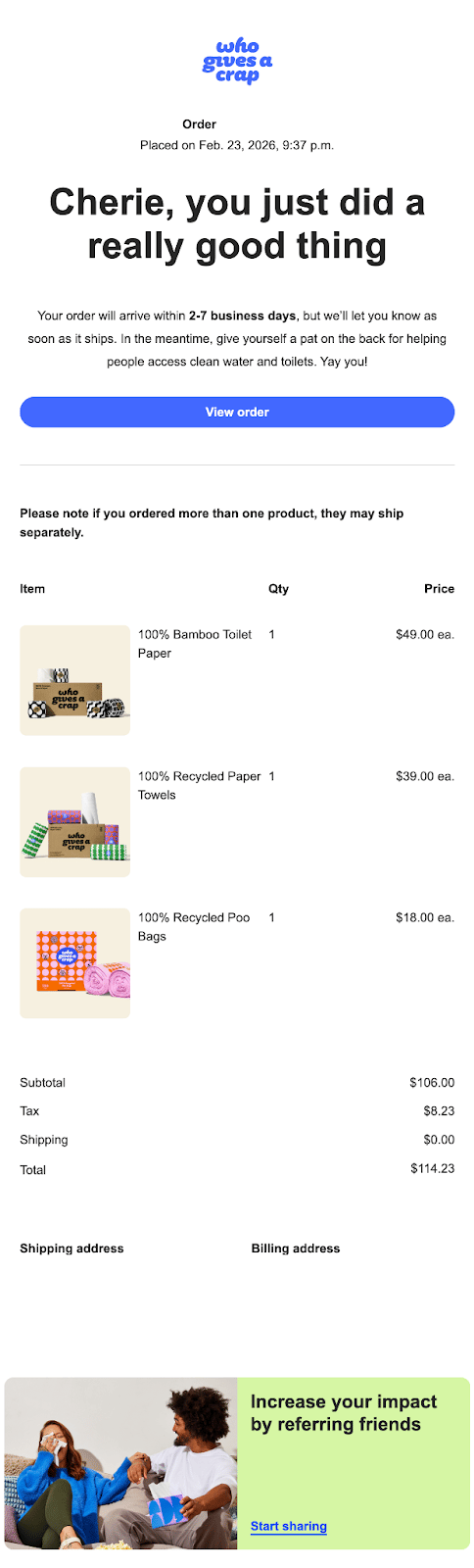
Segmentation only works if you actually change something
Building segments isn't the hard part. The hard part is adjusting your messaging to match each segment's behavior and motivations. If you're sending the same email to discount rejectors and promo-only buyers, you're not segmenting. You're just labeling people differently and hoping for the best.
Here's what needs to change for each segment:
The message itself. Tone, copy, and framing should reflect what actually matters to that segment. Discount rejectors don't care about "20% off." They care about "new arrivals" or "limited stock." Engagement-only subscribers don't need urgency. They need education and trust-building.
The offer. Not every segment needs a discount. Some need convenience (one-click reorder, subscription options). Some need education (product guides, comparison charts). Some need recognition (early access, VIP perks). Match the offer to what motivates them, not what's easiest for you to send.
The timing and frequency. High-engagement subscribers can handle more frequent emails without burning out. Silent VIPs should only hear from you when it truly matters. Seasonal buyers need earlier lead time to get them thinking about your brand before peak season hits. Adjust cadence based on actual behavior, not arbitrary send schedules.
If you're not changing at least one of these three elements, you're not really segmenting. You're just sending the same strategy to different groups and wondering why it's not working.
How to actually implement this
Start small. Pick 2-3 segments that will have the biggest impact on your business. Discount rejectors and first-time buyers are usually good places to start.
Use your platform's segmentation tools to build conditions based on:
Purchase history (what they bought, when, how much)
Engagement level (opens, clicks, site visits)
Lifecycle stage (days since last purchase, number of orders)
Behavioral triggers (abandoned cart, browsing specific categories)
Test your messaging. See what resonates. Then expand to more segments as you learn what works.
Segmentation isn't a one-time setup. It's an ongoing process of testing, learning, and refining.
Segmentation isn't about sending more emails, it's about sending better ones
The brands growing through retention aren't the ones with the biggest email lists or the most frequent send schedules. They're the ones who've figured out that different customers want different things at different times, and they've built their strategy around that reality.
When you segment based on actual behavior instead of surface-level demographics, a few things start to happen:
Engagement climbs because messages feel relevant instead of random
Unsubscribes drop because you're not over-mailing or hitting people with irrelevant content
Revenue per email increases because you're reaching people with offers they actually care about
Customer lifetime value grows because you're building relationships, not just pushing transactions
Segmentation isn't about making your life more complicated. It's about making your marketing more effective. And when you move beyond the basic "openers vs. non-openers" buckets and start tailoring your strategy to how people actually behave, the results aren't subtle. They're measurable, they're scalable, and they compound over time.
Start with two or three of these segments. Build them, test your messaging, and see what happens. Then expand. The brands that win with retention aren't doing everything at once. They're just doing the right things consistently.
Top agencies generate $16.70 per subscriber. Here's how they do it.

Omnisend analyzed 717 agencies managing 2,990 brands to find out what separates the top 10% from everyone else. Turns out, it's not about client size or volume; it's about how efficiently they turn audiences into revenue.
What sets them apart:
SMS adoption drives 202% more revenue on average than email-only strategies
Regular A/B testing correlates with 192% higher revenue compared to agencies that don't test
They launch the first automation within 8 days of onboarding, capturing revenue faster
Automations contribute 45% of total email revenue ($5.96 per message vs. $0.67 for campaigns)
They run 5.3 active automations per client and send 5.4 campaigns monthly; consistent, not chaotic
TL;DR: Strong results aren't about one tactic. They come from layering SMS, testing regularly, optimizing workflows, and maintaining steady campaign activity. Top agencies also retain clients 3x longer (1,020 days on average), pointing to more stable, long-term performance.
*Sponsored
DTC wins:
Plant-based nutrition brand Huel is being acquired by Danone in a deal reportedly worth around €1B. Built on a strong DTC foundation, Huel has grown into a global player in the “complete nutrition” space with RTDs, powders, and meals. With Danone’s scale and R&D behind it, the brand is set to expand even further as demand for convenient, functional nutrition continues to rise.

Annnnd that’s a wrap for this edition!
Thanks for hanging with Chase and me, always a pleasure to have you here.
If you found this newsletter helpful (or even just a little fun), don’t keep it to yourself! Share ecomemailmarketer.com with your favorite DTC marketer. Let’s get them on board so they don’t miss next week’s drops.
Remember: Do shit you love.
🤘 Jimmy Kim & Chase Dimond
PS - Your next best customer might be reading this right now. Want in? Email Jimmy to sponsor this newsletter and more.
Love this newsletter but want to receive it less frequently? Let us know by clicking here!
Reply