- eCom Email Marketer
- Posts
- Agentic commerce is here, and it's changing how people shop
Agentic commerce is here, and it's changing how people shop
Plus, this week's top eCom stories in quick clips.
50 campaigns, 130+ pages of welcome flows, and 10 copywriting frameworks. Everything you need to stop guessing & start driving retention. → Unlock the Vault
Hey, it's Chase and Jimmy here.
People are buying products through ChatGPT now.
Not browsing. Not researching. Actually completing purchases without ever opening a browser or landing on a product page.
ChatGPT drives 15% of Target's referral traffic and 20% of Walmart's. Shopify reported AI-driven traffic to its stores is up 7x in 2025, with orders from AI searches up 11x.
This isn't a future trend to monitor. It's happening right now, and it's reshaping how customers discover and buy products.
Today we're breaking down what agentic commerce actually means, why it matters for your brand, and what you need to do to stay ahead of this shift.
Also inside:
✔️ What if you could spend 48 hrs w/ the DTC operators actually moving the needle?
✔️ You've accidentally trained your customers to ignore you (here's how to fix it)
✔️ Quick clips: This week's top eCom news stories
Let’s dive in.
What if you could spend 48 hrs w/ the DTC operators actually moving the needle?
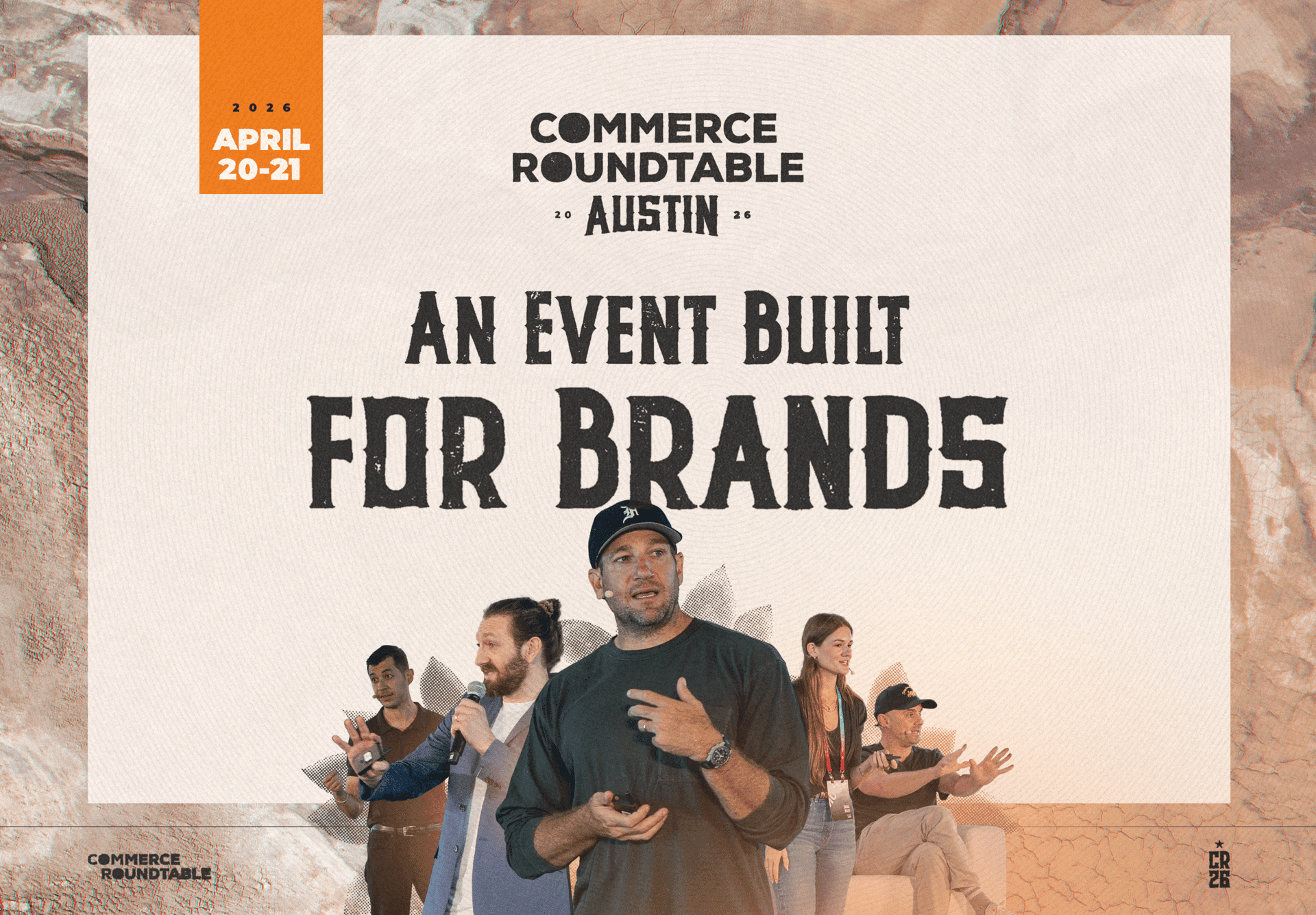
Commerce Roundtable Austin is 60% sold out. On April 20-21, 350+ founders, operators, and marketers will take over downtown Austin for two days of what's actually working in DTC right now; the kind of conversations that change how you run your business the following Monday.
Meta Ads & Creative Strategy in 2026: What's working now and what's changing
Live Retention Flow-Off Debate: Real operators, real numbers, real disagreements
How to Get 20B Views on YouTube: The playbook behind massive organic reach
Tactical TikTok Shop Masterclass: The strategies driving real revenue on the platform
AI Myths vs. Tactics: Cut through the hype and get the practical applications
Building an Operating System for Growth: The frameworks top brands use to scale
Navigating a Male-Dominated Ecosystem: Honest conversations on leadership and growth
We've sold out every event for the past three years. Austin is moving fast.
Secure your spot before it's gone. Save $75 with code CR75 at checkout → Register today
Agentic commerce is here, and it's changing how people shop
Shopping's changing again.
Not in the "we added a mobile app" way or the "now you can buy on Instagram" way. This one's bigger, and it's happening faster than most marketers realize.
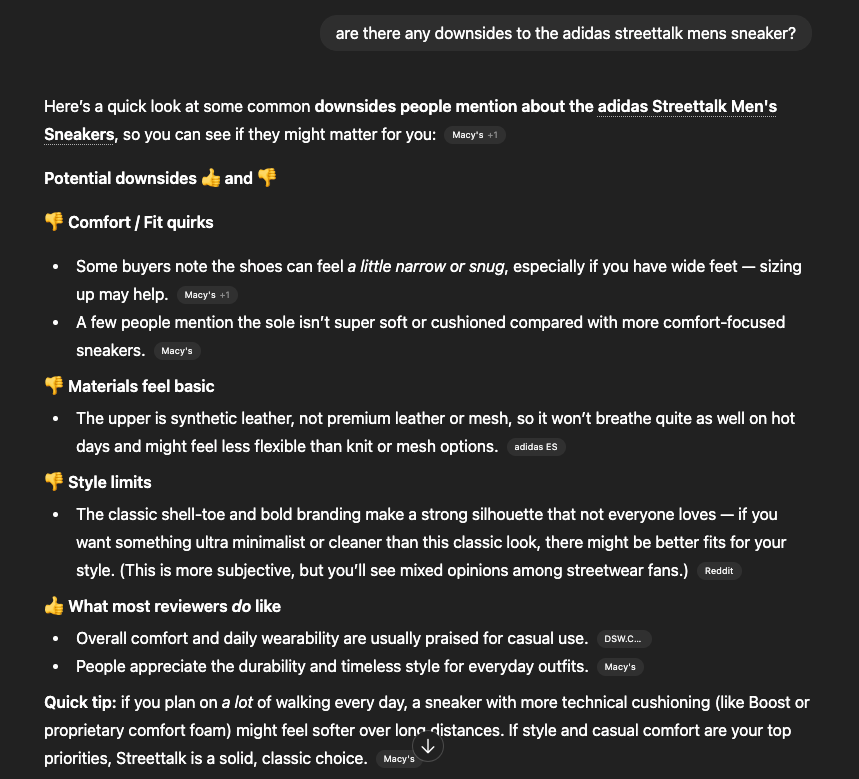
People are already buying products through ChatGPT. They're asking AI assistants to recommend gifts, compare options, and complete purchases without ever opening a browser or tapping through a product page.
This isn't some distant future scenario. It's happening right now, and it's going to reshape how brands show up, get discovered, and actually convert customers.
If you're still thinking about channels the way you did five years ago, you're already behind.
What's actually happening right now
In late 2025, OpenAI rolled out a feature that lets ChatGPT users buy directly from Etsy sellers and select Shopify merchants (brands like Glossier, SKIMS, Spanx, and Vuori). They also introduced ChatGPT apps, which let brands build custom experiences inside the chat interface.
This is the beginning of agentic commerce. Instead of browsing product pages and clicking through checkout flows, people are having conversations with AI assistants that help them discover, compare, and buy, all in one place.
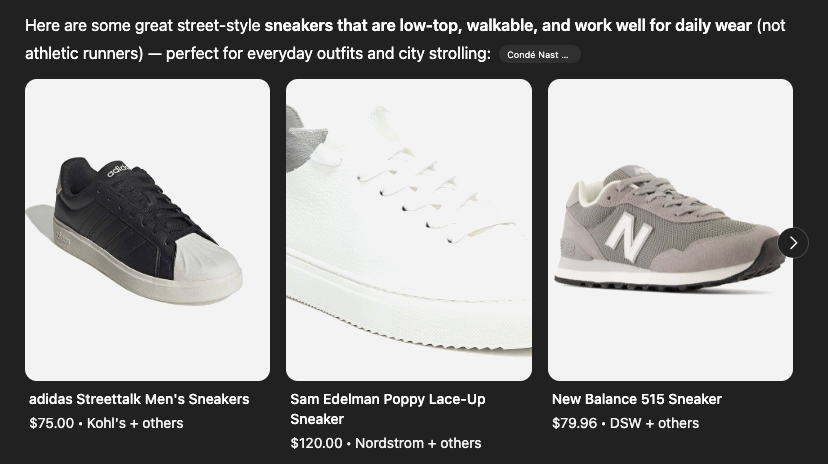
The numbers back it up. ChatGPT now drives 15% of Target's referral traffic and 20% of Walmart's. Shopify reported that AI-driven traffic to its stores is up 7x in 2025, with orders attributed to AI searches up 11x.
This isn't a novelty channel. It's becoming a real revenue driver, and the shift's only going to accelerate.
Why this matters for discovery and conversion
When someone asks ChatGPT, "What should I get my friend for her birthday?", the AI isn't biased toward any brand. It's recommending based on relevance, availability, and price.
Here's what that means in practice:
If you're enabled for instant checkout: The experience stays seamless, and the customer can complete the purchase without ever leaving the chat.
If you're not enabled: The AI links out to your website, which adds friction and increases drop-off.
Either way, you can still show up: Even if you're not ready to enable in-chat checkout, your products can still appear in AI recommendations. But the brands that adopt these protocols early are capturing more of that purchase intent before it leaks out.
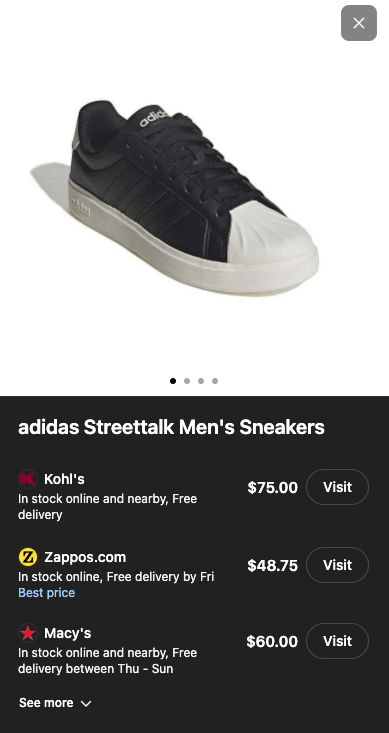
The categories moving fastest right now are low-stakes purchases like household essentials and everyday items. High-consideration categories like furniture or electronics will take longer to shift, but they're coming too.
What marketers need to do right now
Agentic commerce brings opportunity, but it also brings uncertainty. You can influence how you show up in LLM environments, but you can't fully control it the way you do with email or your website.
Here's where to focus:
Start tracking LLM attribution. If visitors are coming to your site from ChatGPT or other AI assistants, you need to know. Most platforms will pass that referral source as a UTM parameter (like utm_source=chatgpt.com). This is your first signal that agentic shopping is becoming a real channel for your brand.
Treat LLM-origin traffic differently. These aren't casual browsers. They're high-intent visitors who've already had a conversation about what they need. Build flows that reflect that (abandoned checkout reminders that reassure instead of push, post-purchase messages that continue the conversation they started in the AI assistant).
Experiment with your presence in LLMs. As branded experiences inside AI platforms expand, test what content, product info, or offers actually drive visibility and engagement. If features like coupons, product links, or consent capture become available, use them to connect LLM discovery with your owned channels.
Strengthen your data foundation. Clean, connected data is what lets you act on new signals quickly. The stronger your data infrastructure, the easier it is to segment conversational shoppers, measure behavior across channels, and turn AI-driven discovery into lasting relationships.
Stay informed on data policies. As LLM platforms evolve, new rules will define what brands can see and how they can engage. Pay attention to these changes and push for transparent, brand-friendly data access so you can actually use signals like product inquiries and shopper questions to inform personalization.
The brands that connect LLM discovery to their owned-channel strategies early are going to be the ones turning conversation into conversion.
LLMs won't replace owned channels, they'll make them more important
It's easy to get distracted by every new platform that promises better reach or discovery. But here's what doesn't change: owned channels are still your most valuable asset.
Here's why they matter more than ever:
You control the data and the relationship: Email, SMS, mobile push, your website; these are the places where you own the experience. They're portable, durable, and let you act on your own terms.
LLM interactions still depend on owned channel data: When someone discovers your product through ChatGPT and lands on your site, what happens next depends entirely on how well you've set up your retention infrastructure.
Clean data is what lets you capitalize on AI discovery: The brands with strong segmentation and thoughtful automation are the ones who can take an AI-driven discovery moment and turn it into a long-term customer relationship.
Agentic commerce doesn't replace that foundation. It makes it more critical.
What this means for omnichannel strategy
Omnichannel marketing used to mean being present on email, social, SMS, and your website. Now it includes AI-powered environments too.
Tomorrow's shoppers are going to research products, ask questions, and make purchases through LLM assistants the same way they already do through Instagram, Google, or email.
The brands that win won't be the ones trying to control every channel. They'll be the ones that meet customers wherever they are and connect those touchpoints into a seamless, data-driven experience.
LLMs are just the next evolution of that. And if you're not thinking about how they fit into your strategy, you're missing a major shift in how people shop.
Where to focus your attention
Here's the reality: agentic commerce is still early, but it's moving fast. You don't need to have all the answers today, but you do need to start paying attention.
Track where your traffic's coming from. Build flows that reflect higher intent. Experiment with how you show up in AI environments. And most importantly, keep your owned channels strong, because that's still where the real relationship lives.
This shift isn't replacing what's already working. It's adding a new layer to it. The brands that adapt early, stay flexible, and connect AI discovery to their retention strategy are the ones who'll come out ahead.
You've accidentally trained your customers to ignore you (here's how to fix it)
Sale. Sale. Silence. Sale.
When this is your email pattern, your customers learn to tune you out between discounts. They wait for the promo. They ignore everything else.
The fix? Show up year-round with campaigns that actually matter.
This free 7-email series shows you how to use gift guides, flash sales, customer goals, loyalty plays, and smart segmentation to drive repeat purchases; without relying on endless discounts.
Stop disappearing. Start building a retention machine.
Quick Clips:
Olaplex is trying to repair more than hair: After a 2023 lawsuit alleging product damage tanked its stock nearly 95%, the brand is in full comeback mode with new leadership, new products, and a softer brand image. Early signs are cautiously optimistic (they're the top prestige hair brand for 18-29 year olds and a rumored acquisition target) but JPMorgan is still bearish and sales are basically flat.
Waiting on their refund like the rest of us: The Supreme Court ruled Liberation Day tariffs illegal, and now retailers like Costco, Lululemon, and e.l.f. are in line for billions back; but U.S. Customs needs 4.4 million manhours to process it all. A new automated system is in the works, but don't hold your breath: fewer than 10% of importers have even set up electronic payment yet.
The customer you never knew you had: Most retail traffic is now anonymous; shoppers arriving mid-funnel from AI search with no cookies, no login, no history. But real-time signals like what they filter, how long they hover over the returns policy, or whether they keep checking delivery dates can tell you more than a purchase history ever could. The play isn't to wait for them to identify themselves; it's to read the room and remove friction fast.
Mark your calendar: NRF's State of Retail & the Consumer virtual event is March 18th; free, one hour, and they're dropping their official 2026 retail sales forecast. Good one to tune into if you want the macro read on where the year is headed.
Annnnd that’s a wrap for this edition!
Thanks for hanging with Chase and me. Always a pleasure to have you here.
If you found this newsletter helpful (or even just a little fun), don’t keep it to yourself! Share ecomemailmarketer.com with your favorite DTC marketer. Let’s get them on board so they don’t miss next week’s drops.
Remember: Do shit you love.
🤘 Jimmy Kim & Chase Dimond
PS - Your next best customer might be reading this right now. Want in? Email Jimmy to sponsor this newsletter and more.
Love this newsletter but want to receive it less frequently? Let us know by clicking here!
Reply