- eCom Email Marketer
- Posts
- CTAs that actually get clicked (and why most don’t)
CTAs that actually get clicked (and why most don’t)
[Free webinar] From 2025 to 2026: Signals, shifts, and what to prepare for feat. Chase, Jimmy and Omnisend 2/3 » Register free
Good morning, Chase and Jimmy here.
A lot of CTA advice focuses on button color or clever wording. That stuff matters, but it’s rarely the reason people don’t click. More often, the issue is timing, intent, or asking for too much too fast.
In today’s article, we break down how to think about CTAs as part of the message, not an afterthought, and how to make the next step feel obvious instead of forced.
Also inside:
✔️ The real reason carts get abandoned
✔️ Chase and Jimmy are two-stepping their way to Austin, TX
✔️ DTC wins: Sierra Madre Lands in Nordstrom
Let’s get into it.
Knowledge drop:
Why do carts really get abandoned? Jimmy analyzed 1,200 of them and found the biggest blocker wasn’t price; it was customers not picturing the delivery.
CTAs that actually get clicked (and why most don’t)
Getting someone to open your email or read your text is only the first step.
The real work starts when you ask them to do something. This is where a lot of good campaigns quietly fall apart. Not because the offer is wrong or the creative misses, but because the CTA doesn’t line up with what the customer is ready for in that moment.
In crowded inboxes, vague or overly aggressive CTAs get ignored fast. The strongest CTAs today don’t feel clever or pushy. They feel obvious. They match intent, remove friction, and make the next step feel natural.
Here’s how to think about CTAs in a way that actually drives clicks and conversions.
1. Anchor your CTA to customer intent
Before you write a single word, you need to understand the decision the customer is closest to making.
CTAs work best when they align with intent instead of trying to manufacture it. Someone browsing a product page is usually looking for clarity or reassurance. Someone with items in their cart needs friction removed. Someone reading a newsletter may just need a gentle nudge, not a hard sell.

When a CTA skips ahead of the customer’s mindset, it creates resistance. Even a perfectly written button won’t perform if it’s asking for too much too soon. The goal is to meet people where they already are and make the next step feel easy.
2. Clarify the action and outcome
Clarity still beats creativity when it comes to CTAs.
A good CTA answers two questions instantly:
What happens when I click?
Why should I care right now?
Generic phrases like “Learn more” or “Click here” don’t do enough work. They force the reader to fill in the gaps themselves, which slows momentum.
More effective CTAs describe the outcome:
“View the collection”
“See what’s back in stock”
“Finish checking out”

The clearer the action, the less mental effort it takes to click. When customers don’t have to think, they’re far more likely to act.
3. Commit to one primary CTA
One of the fastest ways to weaken a CTA is to add more of them.
When emails include multiple CTAs competing for attention, they create hesitation instead of choice. Even if every option is technically relevant, the reader has to decide which action matters most, and that moment of friction often kills the click entirely.
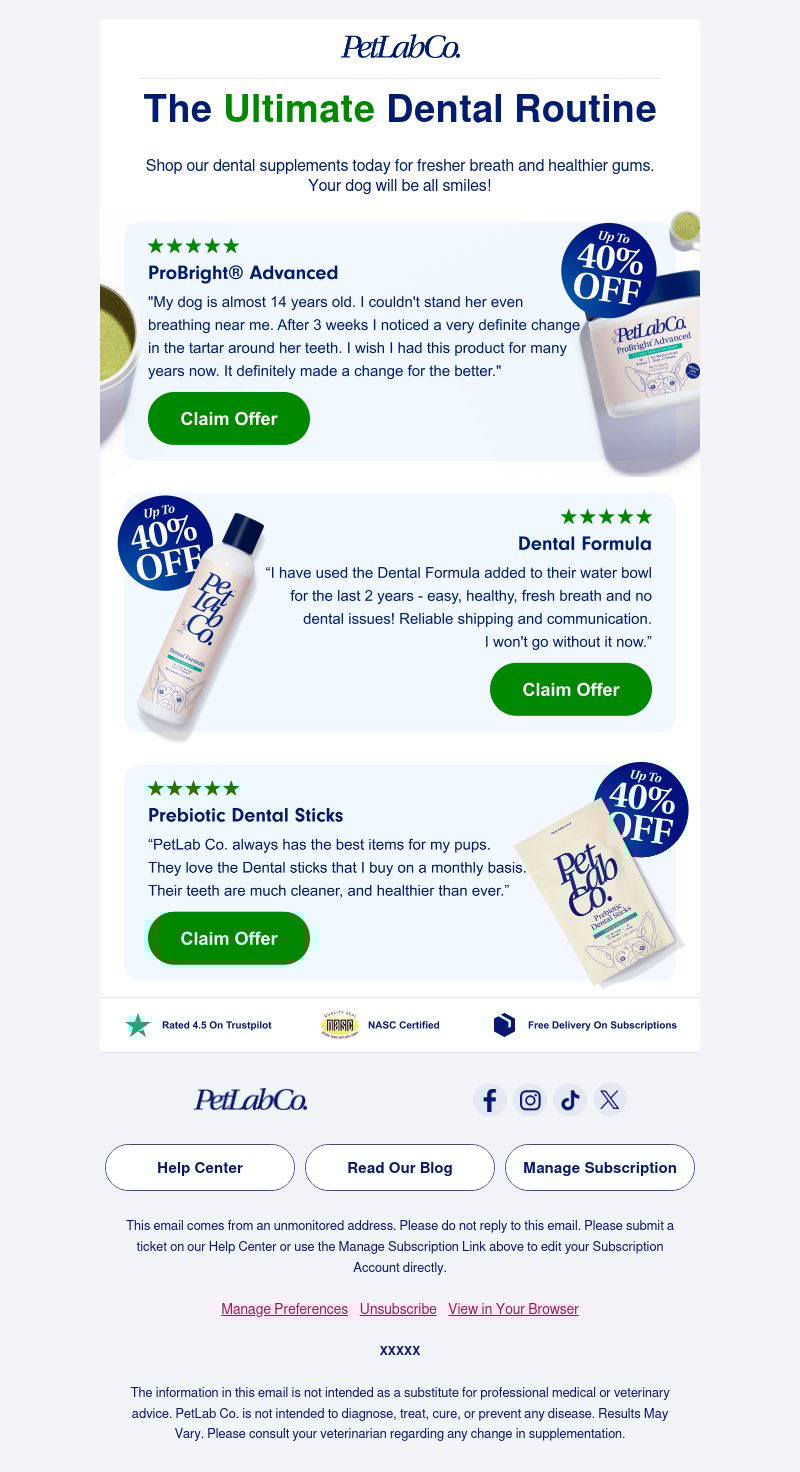
Strong emails are decisive. They have one clear goal and one primary CTA that supports it. Secondary CTAs can work in longer messages, but only when they reinforce the main action instead of distracting from it.
If you’re struggling to pick a primary CTA, it’s usually a sign the message itself needs tightening.
4. Place the CTA where momentum peaks
Design matters, but placement matters more.
A CTA should appear where it naturally makes sense in the flow of the message. That usually means after you’ve established value, not before. Above-the-fold CTAs work well when intent is already high, like in cart or product emails. In other cases, let the message earn the click first.
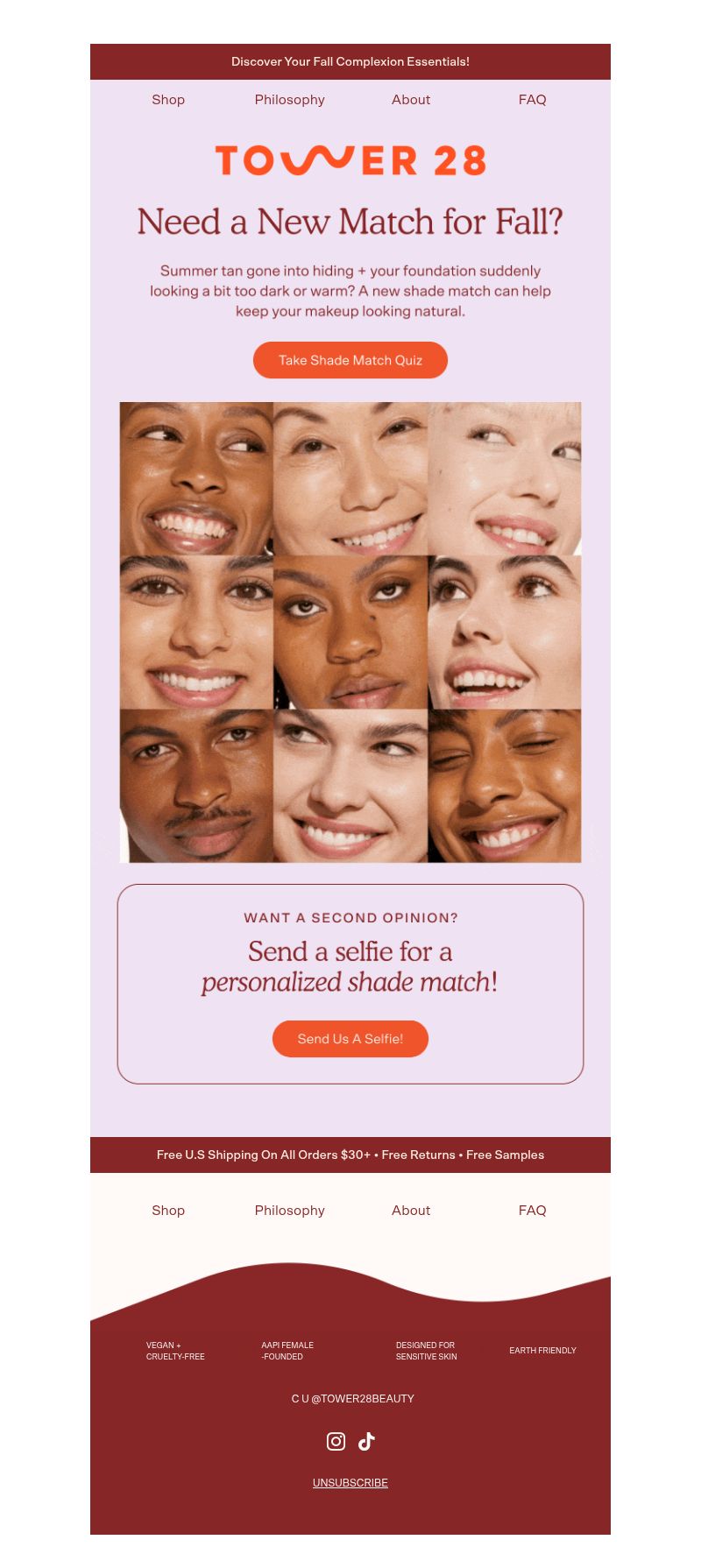
For longer emails, repeating the CTA at the end gives readers a clear next step once they’ve absorbed the content. The goal isn’t to hide the CTA, but to introduce it at the moment the reader is most ready to act.
5. Use urgency only when it’s real
Urgency still drives action, but only when it’s believable.
Customers are quick to spot fake scarcity. When everything is “ending soon” or “last chance,” nothing feels urgent anymore. Over time, this erodes trust and conditions people to wait.
The strongest urgency comes from real constraints:
Limited inventory
Time-bound access
Behavior-based timing

If now actually matters, explain why. When urgency is rooted in reality, it motivates without feeling manipulative.
6. Write SMS CTAs as gentle nudges
SMS is a different environment, and CTAs need to respect that.
Texts live alongside messages from friends and family, which means tone and timing matter even more. The best SMS CTAs are short, direct, and easy to act on without explanation.
Think reminders, not pitches.
One clear action, one clean link, and a reason to click now. Anything more starts to feel intrusive. SMS works best when it complements email, not when it tries to replace it.

7. Align CTAs with your brand voice
CTAs don’t exist in isolation.
A playful brand, a luxury brand, and a utilitarian brand shouldn’t sound the same, even if they’re asking for the same action. Tone plays a big role in whether a CTA feels trustworthy or jarring.

The key is consistency. When the CTA sounds like a natural extension of the message and the brand, it feels seamless. When it sounds like a generic marketing button, it creates friction.
8. Refine CTAs based on real outcomes
Testing CTAs is still important, but optimization should serve outcomes, not vanity metrics.
Clicks matter, but what happens after the click matters more. A CTA that drives fewer clicks but higher-quality traffic is often the better performer long term.
Look at:
Click-through rate
Conversion after click
Downstream behavior
Let performance guide refinement, but avoid chasing tiny gains that don’t translate to real results.
A CTA should feel like the natural next step
Strong CTAs aren’t about persuasion. They’re about alignment.
When the message is clear, the timing makes sense, and the value is obvious, the CTA doesn’t have to work very hard. It straight up points people in the direction they were already headed.
Remember: Most CTA issues aren’t copy problems.
They’re clarity problems. Or intent problems. Or timing problems.
Fix those upstream, and the CTA almost writes itself.
Chase and Jimmy are two-stepping their way to Austin, TX

Commerce Roundtable is landing in Austin, Texas on April 20–21; and this one is shaping up to be a tight, highly curated room built for operators who actually want to execute.
You’ll be in a room with 350+ founders, marketers, and growth teams, plus 15 operator-led keynotes focused on what’s working right now. Think practical playbooks, real numbers, and conversations that turn into action.
So get ready to dust off those boots and meet us in Austin!
Brands can save $100 with code: BRAND100 → Register today
DTC wins:
Women-owned golf lifestyle and apparel brand Sierra Madre officially launched in Nordstrom on January 4, 2026. The retail expansion marks a major milestone for the brand as it brings its modern, off-course-friendly golf aesthetic to a national audience through one of the most influential department stores in the U.S.

Annnnd that’s a wrap for this edition!
Thanks for hanging with Chase and me, always a pleasure to have you here.
If you found this newsletter helpful (or even just a little fun), don’t keep it to yourself! Share ecomemailmarketer.com with your favorite DTC marketer. Let’s get them on board so they don’t miss next week’s drops.
Remember: Do shit you love.
🤘 Jimmy Kim & Chase Dimond
PS - Your next best customer might be reading this right now. Want in? Email Jimmy to sponsor this newsletter and more.
Love this newsletter but want to receive it less frequently? Let us know by clicking here!
Reply