- eCom Email Marketer
- Posts
- Test less. Learn more. The A/B tests that actually move email performance
Test less. Learn more. The A/B tests that actually move email performance
Plus, this week's top eCom stories in quick clips.
Roses are red, violets are blue. Retention drives revenue... and we can teach you. 💘 Save $450 on eCom Email Certified with code: CUPID
Hey, it's Chase and Jimmy here.
Most A/B tests are a waste of time.
Not because testing doesn't work – it does. But because most teams are testing the wrong things. They tweak button colors and subject line emojis while ignoring the variables that actually change behavior.
If you want better email performance, you don't need to test more. You need to test smarter.
Today we're breaking down 9 A/B tests that consistently surface useful insights – the kind that actually move opens, clicks, and conversions instead of just giving you something to put in a deck.
Also inside:
✔️ Is your email timing costing you revenue?
✔️ Retention status: It's complicated 💔
✔️ Quick clips: This week's top eCom news stories
Let’s dive in.
Is your email timing costing you revenue?

Omnisend analyzed billions of emails to answer a question every marketer asks, "When do emails actually get opened, clicked, and converted?" The results aren’t what most playbooks say.
Opens peak later than expected. Conversions spike on specific days of the month. And a few small timing shifts can make a measurable difference in performance.
This guide breaks down the best days, times, and moments to hit send in 2026. Plus, learn how to put those insights into action with timezone-based sends and smarter scheduling.
Test less. Learn more. The A/B tests that actually move email performance
If you want better email performance, you don’t need a full redesign or a brand-new strategy deck.
You need clearer signals you can actually trust.
A/B testing works when it’s focused, intentional, and tied to how people actually behave. The problem is most teams test things that are easy to change, not things that meaningfully affect decisions.
Below are nine tests that consistently surface useful insights, plus how to run them without muddying your data or chasing vanity wins.
Before you start testing anything, a few non-negotiables:
Start with a clear hypothesis. Know what you expect to learn.
Test one variable at a time. Always.
Keep variations limited so results stay clean.
Make sure the sample size is large enough to matter.
Let tests fully run before calling a winner.
Pair performance data with qualitative feedback when possible.
Now let’s get into what’s actually worth testing.
1. Set expectations with your subject lines
Subject lines aren’t the place to be clever for the sake of it. Their real job is to earn the open by clearly signaling what’s inside.
The best-performing subject lines usually balance curiosity with clarity. If someone opens the email, they should feel like the subject line delivered on its promise.
What to test:
Short versus slightly longer subject lines
Straightforward benefit-led copy versus intrigue
Preview text that reinforces value versus urgency
Emojis versus none, especially for mobile-heavy audiences

Instead of chasing open rate alone, pay attention to what happens after the open. A subject line that gets fewer opens but drives more clicks and conversions is usually the better long-term play.
2. Test incentives based on motivation, not just value
Discounts are familiar but that doesn’t always make them effective.
Different incentives trigger different motivations, even when the dollar value is similar. Testing helps you understand what actually moves your audience to act.
What to test:
Percentage off versus fixed dollar amounts
Free shipping versus a discount
Free gift with purchase
Access-based incentives like early drops or limited runs
Value-add content tied to a product or category

Measure success by conversion quality, not just redemptions. Some offers attract deal-seekers. Others attract customers more likely to come back.
3. Try seasonal framing, not just seasonal design
Seasonal campaigns work because they provide context, not because they just included a holiday emoji.
The strongest seasonal emails align the message, offer, and timing with how people are already thinking.
What to test:
Practical seasonal framing versus playful or emotional angles
Product-led messaging versus lifestyle-led storytelling
Seasonal urgency versus evergreen relevance
Copy that acknowledges the moment versus generic promotion

This is especially useful when transitioning between seasons. Testing now helps you reuse what works instead of reinventing every time.
4. Switch up CTA language and placement together
CTAs fail most often because they are vague, buried, or competing with too many other actions.
Testing CTAs is about understanding how people move through the email, not just which button gets clicked.
What to test:
Direct action language versus emotional phrasing
Button versus text-based CTAs
Above-the-fold placement versus reinforcement later in the email
Single primary CTA versus one clear primary with supporting links

Be sure to look at click distribution, not just total clicks. If people are clicking everything except the main CTA, that’s useful feedback.
5. Play around with different layouts based on reading behavior
Design influences how people consume information, especially on mobile.
Layout testing helps you understand whether your audience prefers scanning options or being guided toward a single story.
What to test:
Single-column versus modular layouts
Product grids versus hero-focused storytelling
Visual-first versus copy-led structures
Order of content blocks within the same email

Watch for scroll depth and CTA engagement. Sometimes fewer options lead to more decisive action.
6. Leverage product recommendations that feel relevant
Personalization only works when it’s genuinely useful.
Testing recommendation logic helps you avoid sending emails that feel generic, even when they’re technically personalized.
What to test:
Dynamic recommendations versus static selections
Recently viewed items versus category-based suggestions
“You might like” versus social-proof-driven picks
Abandoned intent follow-ups versus broader discovery

Evaluate which recommendations drive downstream engagement, not just clicks in the email itself.
7. Use smarter personalization instead of default winners
Traditional A/B testing picks one winner and sends it to everyone. That’s efficient, but it leaves opportunity on the table.
More advanced testing tools can identify which version performs better for different segments and route accordingly.
What to test:
Copy tone preferences across segments
Offer sensitivity by customer type
Visual styles for new versus returning subscribers
This shifts your testing from “what works best overall” to “what works best for whom.”
8. Test send timing with intent in mind
Timing is context. The same email can perform very differently depending on when it lands.
Testing send times helps align your message with when people are most likely to take action.
What to test:
Morning versus evening sends
Weekday versus weekend behavior
Time-zone-aware delivery
Campaign timing relative to events or launches
Remember to measure success by conversions and downstream behavior, not opens alone.
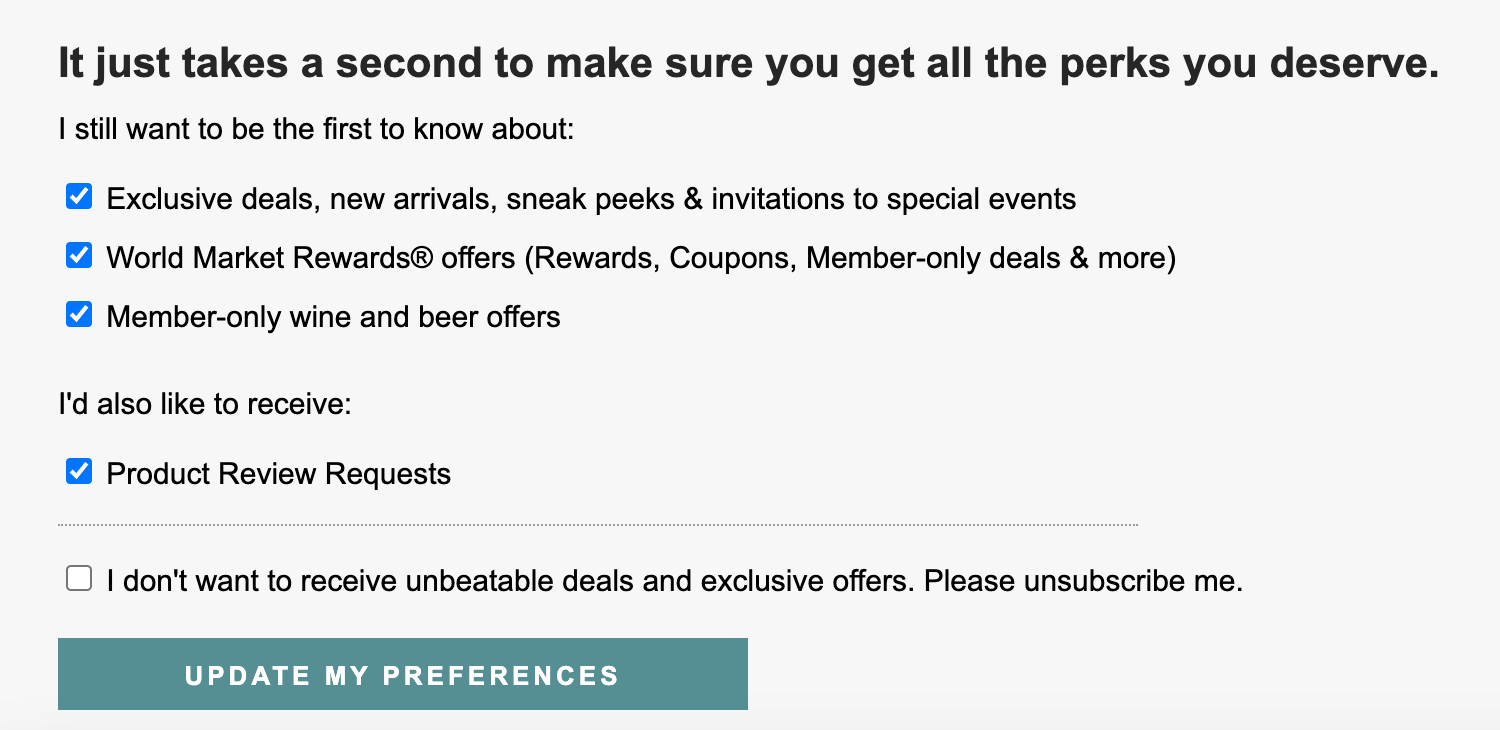
9. Treat opt-outs like part of the experience
How you handle unsubscribes says a lot about your brand.
Clear options and respectful language build trust and protect deliverability. When people feel in control, they’re more likely to stay engaged longer.
What to test:
Straight unsubscribe links versus preference centers
Neutral language versus friendly, human copy
Placement visibility in the footer
Options to reduce frequency instead of fully opting out
A smaller, healthier list will outperform a bigger, disengaged one every time.
What intentional testing actually delivers
A/B testing isn’t about chasing perfection or proving a point.
It’s about replacing assumptions with understanding. When you focus on learning instead of “winning,” patterns start to show up. Those patterns shape better campaigns, stronger decisions, and more confident strategy.
The teams that get the most out of testing don’t run more tests. They run better ones and actually use what they learn.
That’s when testing stops feeling like busywork and starts compounding.
Retention status: It's complicated 💔

This Valentine's Day, we're playing cupid between you and your retention strategy.
Here's the deal: We're taking $450 off eCom Email Certified because we want to bring your relationship status from "it's complicated" to "match made in heaven."
Whether you're currently having a love-hate relationship with your email campaigns or you're ready to finally commit to becoming a certified expert, now's the time.
Use code: CUPID to save $450 (Offer expires 2/14/2026 at 11:59 PM PT)
Quick Clips:
Valentine’s Day Spend to Hit $29.1B: According to the NRF, shoppers plan to spend a record $29.1B this Valentine’s Day, with big jumps in gifts for pets ($2.1B), friends, and coworkers. Jewelry tops the list at $7B, followed by nights out and clothing.
Oats Overnight adds $45M to fuel omnichannel growth: The high-protein, drinkable oatmeal brand secured new funding from Asto Consumer Partners to expand retail distribution, boost marketing, and automate its vertically integrated manufacturing.
TrueStart Coffee lands Series A from Innocent Drinks backer: UK performance-focused coffee brand TrueStart raised a multi‑million‑pound Series A led by JamJar Investments. The funding will expand retail reach, grow its DTC channel, and support new product launches as the brand pushes deeper into the functional energy coffee space.
Amazon cuts 16,000 roles amid AI-driven restructuring: Amazon is making another major round of layoffs as it flattens management layers and leans further into AI efficiency. While retail impacts weren’t specified, the company continues investing heavily in higher-growth areas like ads, AWS, and seller services.
Allbirds exits U.S. full-price stores to go digital-first: Allbirds will close all remaining full-price U.S. stores and shift focus to eCommerce and wholesale partnerships in a bid to return to profitability. The move underscores the broader pullback from physical retail among once DTC-native brands.
Annnnd that’s a wrap for this edition!
Thanks for hanging with Chase and me. Always a pleasure to have you here.
If you found this newsletter helpful (or even just a little fun), don’t keep it to yourself! Share ecomemailmarketer.com with your favorite DTC marketer. Let’s get them on board so they don’t miss next week’s drops.
Remember: Do shit you love.
🤘 Jimmy Kim & Chase Dimond
PS - Your next best customer might be reading this right now. Want in? Email Jimmy to sponsor this newsletter and more.
Love this newsletter but want to receive it less frequently? Let us know by clicking here!
Reply