- eCom Email Marketer
- Posts
- The re-engagement framework: How to win back the right subscribers (and let the rest go)
The re-engagement framework: How to win back the right subscribers (and let the rest go)
What do marketers call the place abandoned carts go? The Inboox Be the first to access the AI-driven database w/ over 1M real emails & insights.

Good morning, Chase and Jimmy here.
Referrals are one of the few growth levers that actually get cheaper as you scale... But only if your program is built and promoted the right way.
In today's breakdown, we walk through how to design a referral and rewards program that customers understand, want to use, and keep coming back to.
Also inside:
✔️ Just because it’s cold outside doesn’t mean your list should be
✔️ Knowledge drop: Six ways to get more results from your eCommerce emails in 2026
✔️ DTC wins: YSE Beauty Closes $15M Series A to Fuel Sephora Expansion
Let’s get into it.
Just because it’s cold outside doesn’t mean your list should be

You worked hard to grow your list during BFCM. Now the real risk is wasting it. In this live session, Omnisend’s experts break down how to turn holiday shoppers into engaged, revenue-driving audiences for Q1 (without blasting your entire list).
Here's what they'll cover:
How to spot your highest-value Q4 subscribers
Which post-holiday segments are worth leaning into (and which to pause)
Practical targeting and messaging strategies that still convert after the rush
📅 Jan 15 at 7:00 AM | Save your Q4 gains and start Q1 strong >> Register free
The re-engagement framework: How to win back the right subscribers (and let the rest go)
Re-engagement emails get a bad reputation because most brands use them the wrong way. They lead with discounts, cross their fingers, and hope inactive subscribers suddenly care again. That approach doesn’t just underperform, it actively hurts deliverability and cheapens your brand.
Re-engagement isn’t about reviving everyone on your list. It’s about figuring out who’s still worth talking to, giving them a compelling reason to re-engage, and gracefully sunsetting the rest.
This framework focuses on the seven re-engagement plays that consistently work, the ones that protect your list health and recover real revenue without feeling desperate.
First, let’s talk about what makes a re-engagement email work
Before tactics, you need the foundation. High-performing re-engagement emails usually share a few things in common:
A subject line that earns the open, not clickbait, just clear intent or curiosity
Context, acknowledging inactivity without guilt-tripping
Relevance, tied to what the subscriber actually cared about before
One clear action, not five CTAs competing for attention
A reason to act now, whether that’s timing, availability, or value
If you miss these, no strategy below will save the campaign.
1. Start with honest acknowledgment, not a gimmick
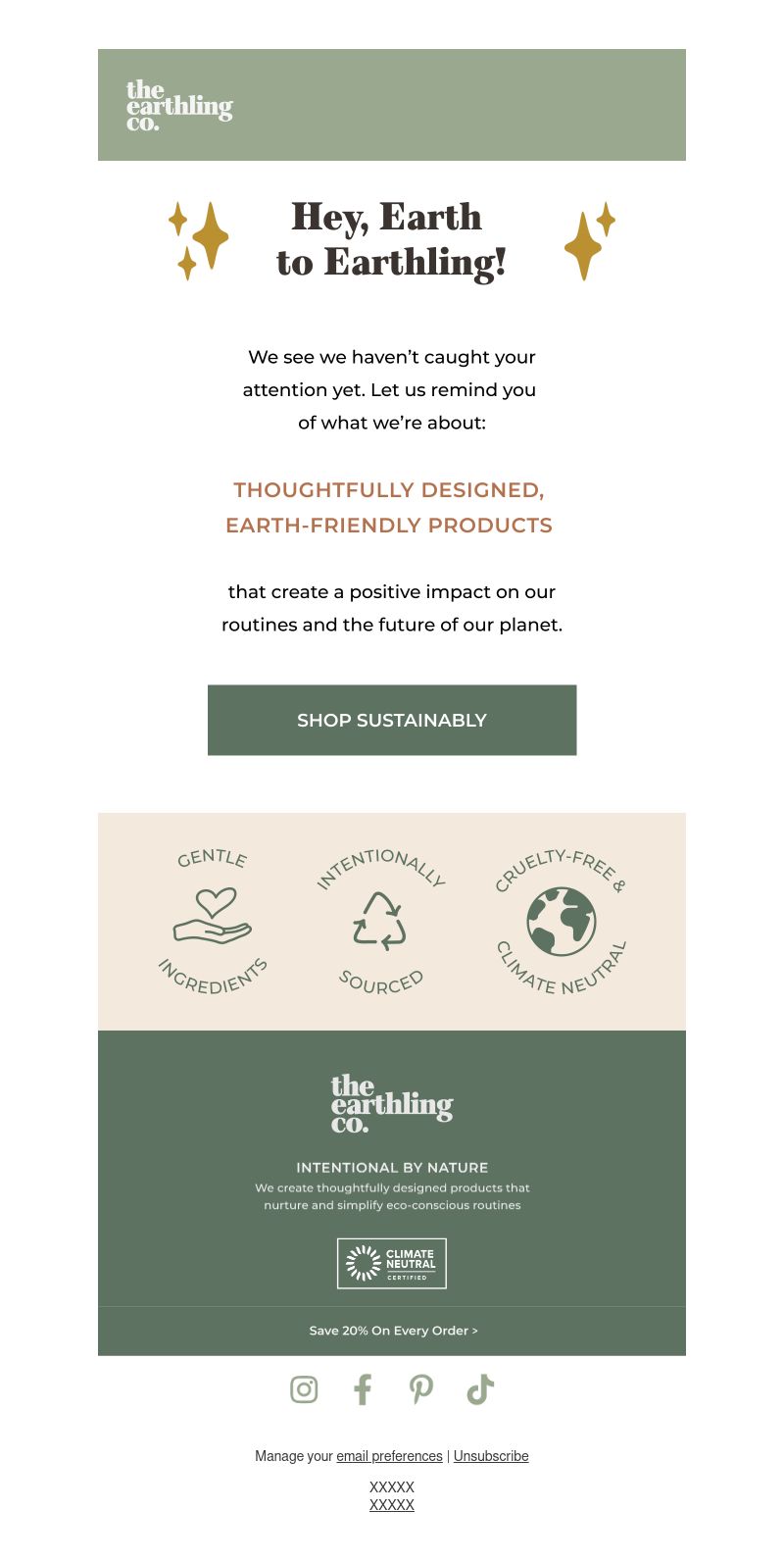
Sometimes the best opener is the simplest one. Calling out inactivity directly can be surprisingly effective when it’s done with clarity and warmth instead of guilt or theatrics.
This works especially well for long-time subscribers or past buyers who simply drifted away. A straightforward “we haven’t seen you in a bit” sets context and lowers friction. You’re not pretending everything’s normal. You’re resetting the relationship.
It feels human, transparent, and respectful of the reader’s time.
This works well for:
Long-time subscribers
Past repeat buyers
Brand-loyal audiences
Subject line ideas:
We miss you
Still interested?
It’s been a minute
2. Lead with relevance, not discounts
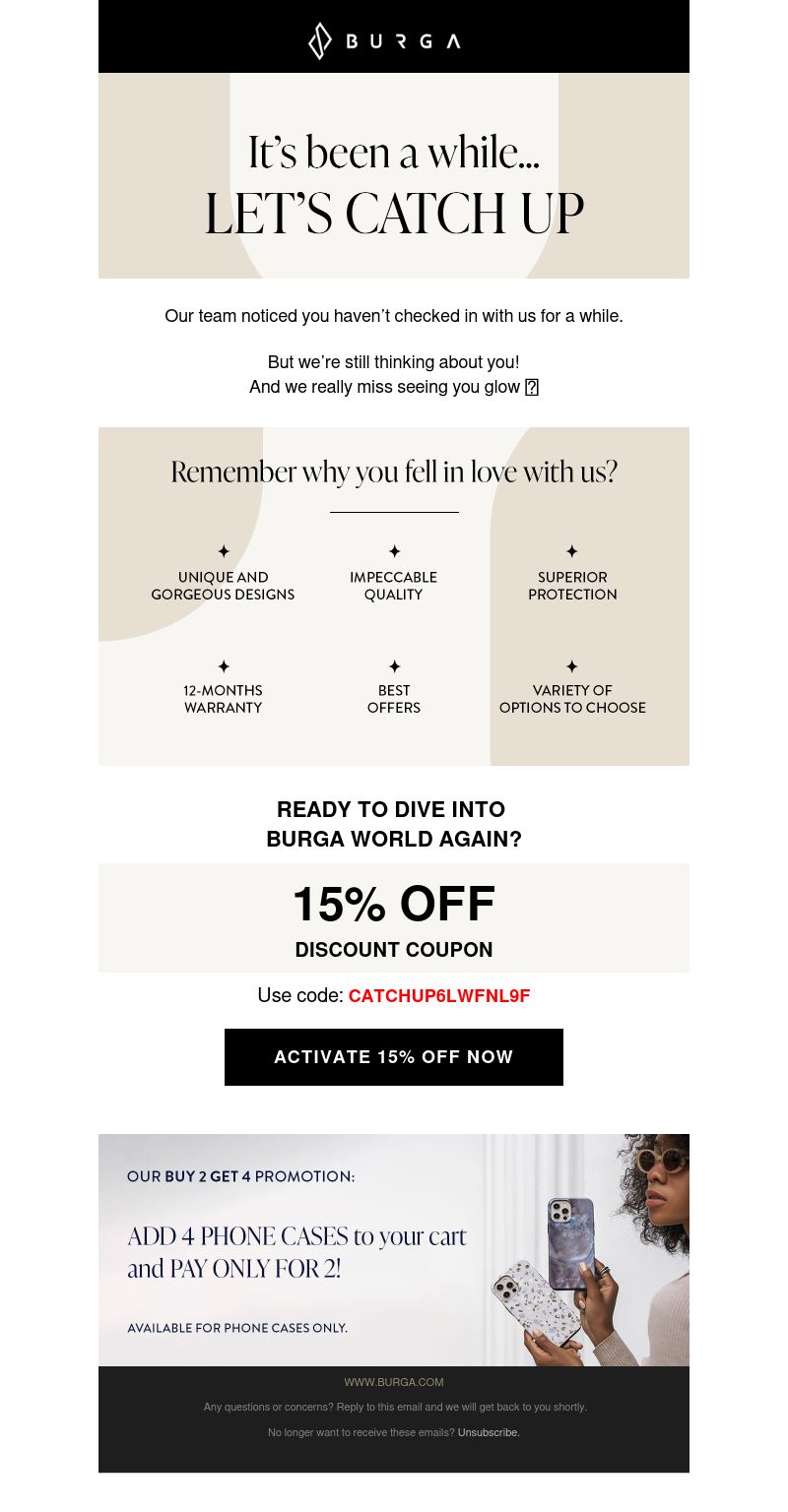
Discounts shouldn’t be your first move in a re-engagement flow. Relevance should be.
When someone hasn’t engaged in a while, the fastest way to lose them again is by showing something that doesn’t connect to why they signed up in the first place.
Before offering an incentive, remind subscribers what originally pulled them in. Surface products tied to their last purchase, categories they browsed, or use cases they previously engaged with. If the message feels familiar, it earns attention. If it feels random, it gets ignored.
Use this for:
Lapsed buyers with clear purchase history
Category-driven brands
Subscribers who engaged heavily in the past
Subject line ideas:
Since you liked this
We thought you’d want to see this
Based on what you browsed
3. Use exclusivity to reward, not bribe
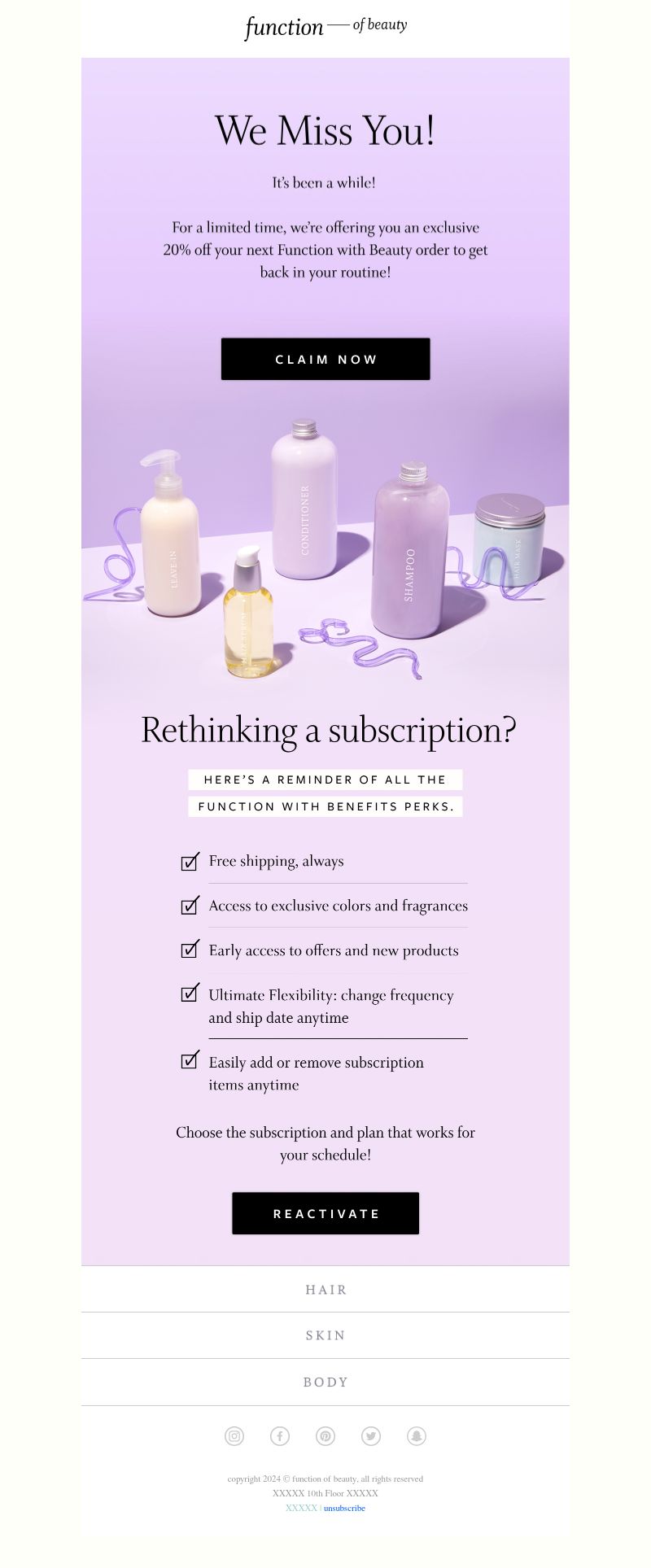
If you do introduce an incentive, it needs to feel intentional. Re-engagement discounts work best when they feel earned, not reactive. Frame them as a thank-you or a perk, not a last-ditch attempt to get attention.
This could be early access, a small credit, a loyalty-based perk, or a limited reward tied to tenure or past behavior. The goal is to reinforce the relationship, not train subscribers to wait for discounts.
Use this for:
Past repeat buyers
Loyalty program members
High-AOV or high-LTV segments
Subject line ideas:
This one’s just for you
A thank-you for being here
Loyalty has its perks
4. Ask one good question to restart the conversation
Re-engagement doesn’t always need to sell. Sometimes it just needs to listen.
A single, thoughtful question can outperform a full promotional email. Ask what they’re looking for, what changed, or how you can make emails more useful going forward.
Keep it short. One click or one reply is enough.
Use this to:
Update preferences
Learn objections
Guide future recommendations
Subject line ideas:
Help us get this right
Tell us what you’re looking for
Let’s make this more relevant
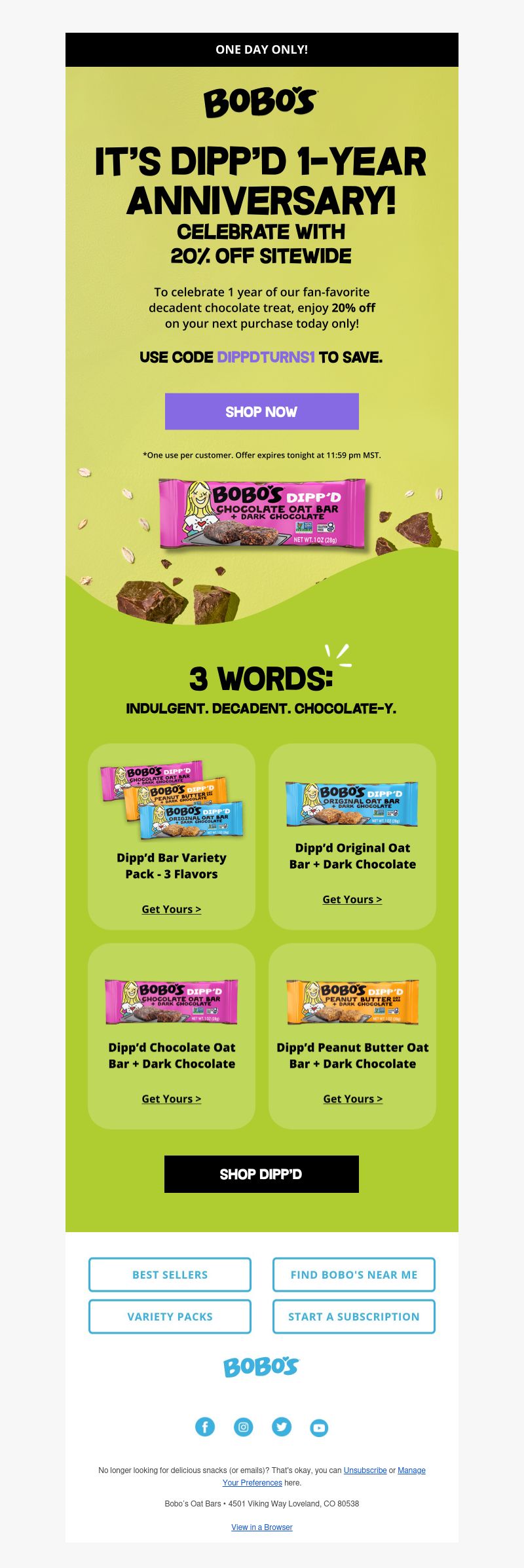
5. Anchor re-engagement to a real moment
Timing matters. Emails tied to an actual moment feel intentional instead of random.
Use natural anchors like anniversaries, season changes, restocks, or “it’s been a year since your last order.” These give you a reason to show up that doesn’t feel forced.
Context creates relevance, and relevance drives action.
Use this for:
Lapsed but warm subscribers
Long-term customers
Seasonal reactivation
Subject line ideas:
A little birthday treat
It’s your anniversary with us
New season, new favorites
6. Reinforce trust with social proof, not hype
When someone hasn’t engaged in a while, hype rarely brings them back. Proof does. Social validation helps reduce hesitation without applying pressure.
Use short reviews, testimonials, or customer stories that feel grounded and specific. Avoid big claims. Let real customers do the talking. The goal is reassurance, not persuasion.
Use this for:
Subscribers who’ve gone quiet after a first purchase
Higher-consideration products
Brands with strong reviews or community
Subject line ideas:
Here’s what customers are saying
Why people keep coming back
Don’t just take our word for it

7. Close the loop with a clear stay-or-go moment
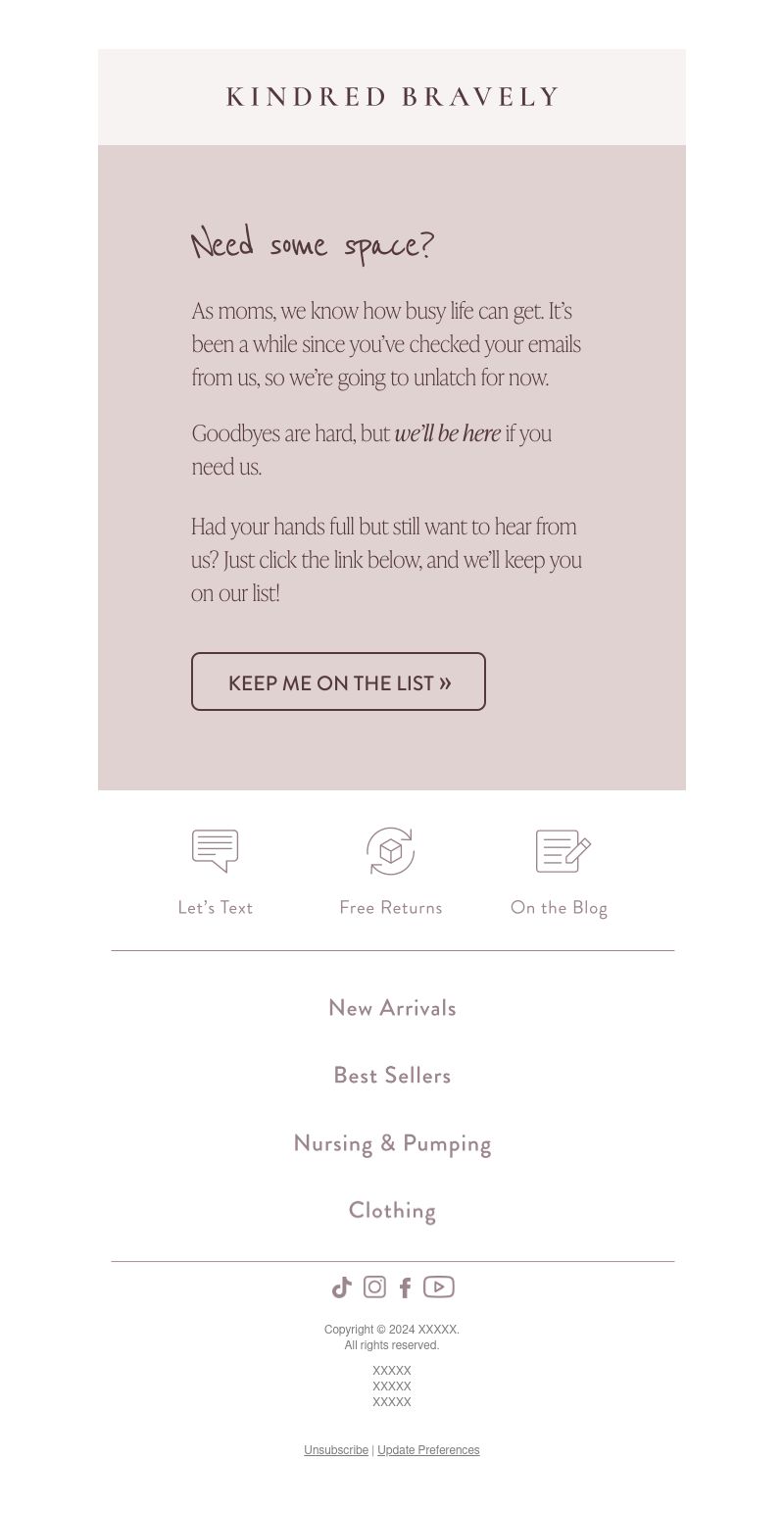
Every re-engagement flow should end with clarity. After a few attempts, give subscribers a simple choice: stay on the list or quietly step away.
This isn’t a threat. It’s respect. Many subscribers will re-engage simply because you acknowledged their time and gave them control. Those who don’t respond are signaling something just as valuable.
Use this for:
Long-inactive subscribers
Deliverability clean-up
Final step in a re-engagement flow
Subject line ideas:
Still want to hear from us?
Should we keep sending these?
Last check-in

The real goal of re-engagement
The goal isn’t to win everyone back. It’s to build a healthier list.
A strong re-engagement framework helps you:
Recover revenue from subscribers who still care
Improve deliverability and engagement metrics
Stop over-marketing to people who are already gone
Inactive subscribers aren’t a failure. They’re a signal. When you respond with intention instead of panic, your email program gets stronger every time.
Knowledge drop:
Generic emails won’t survive 2026. Jimmy shares six concrete shifts (from AI-powered upsells to smarter automation) that are already driving stronger results.
DTC Wins:
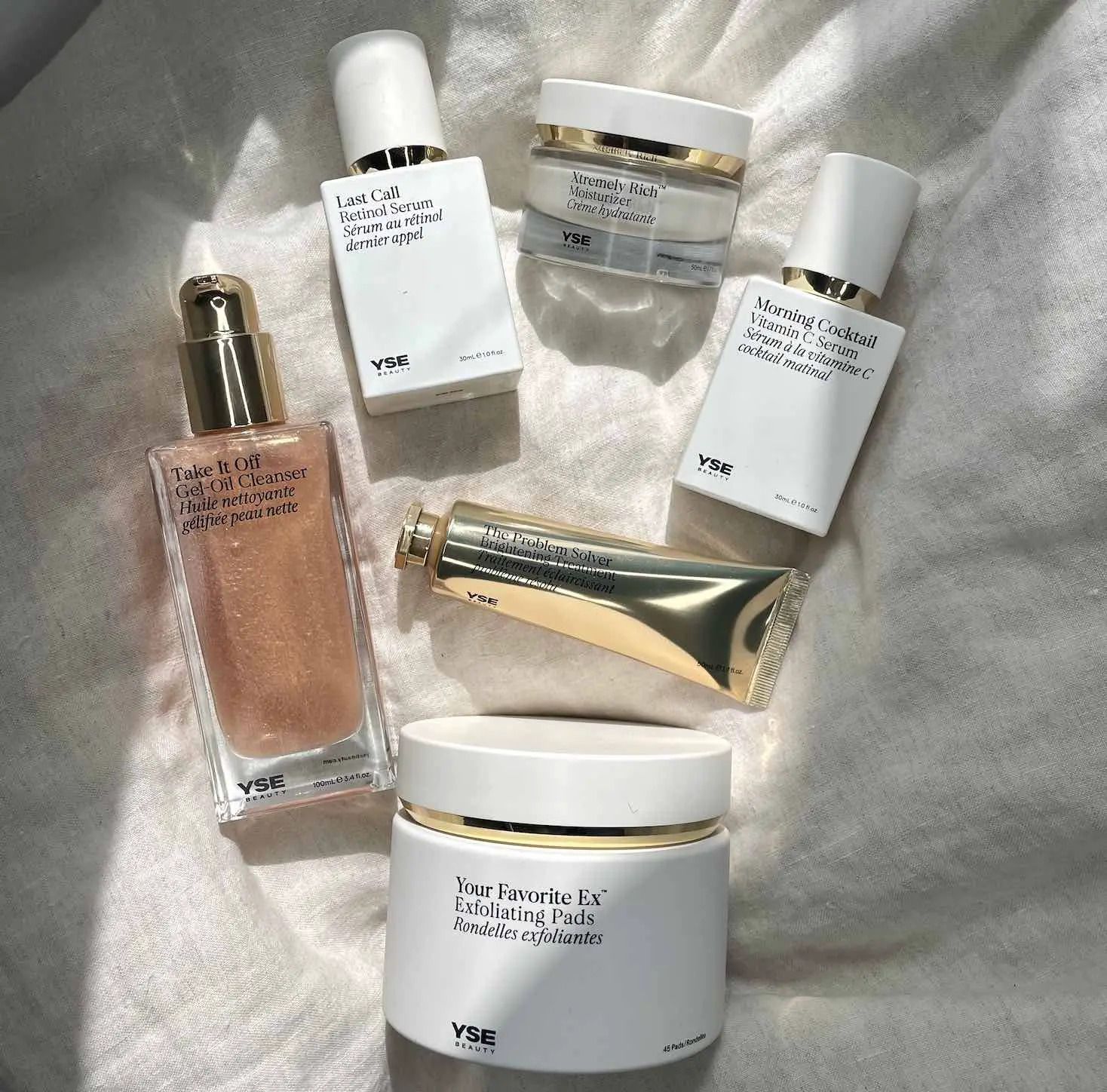
YSE Beauty, the clinically tested skincare brand founded by Molly Sims, closed a $15M Series A. The funding will accelerate nationwide expansion across Sephora doors and continued growth in e-commerce, following a breakout year with 120% revenue growth. Built for women 35+, YSE is proving that results-driven beauty and a clear point of view still win.
Annnnd that’s a wrap for this edition!
Thanks for hanging with Chase and me, always a pleasure to have you here.
If you found this newsletter helpful (or even just a little fun), don’t keep it to yourself! Share ecomemailmarketer.com with your favorite DTC marketer. Let’s get them on board so they don’t miss next week’s drops.
Remember: Do shit you love.
🤘 Jimmy Kim & Chase Dimond
PS - Your next best customer might be reading this right now. Want in? Email Jimmy to sponsor this newsletter and more.
Love this newsletter but want to receive it less frequently? Let us know by clicking here!
Reply