- eCom Email Marketer
- Posts
- The smart way to automate commerce marketing
The smart way to automate commerce marketing
Plus, this week's top eCom stories in quick clips.
[Free webinar] From 2025 to 2026: Signals, shifts, and what to prepare for feat. Chase, Jimmy and Omnisend 2/3 » Register free
Hey, it's Chase and Jimmy here.
Automation gets a bad rap because a lot of brands use it to send more emails instead of better ones.
The truth is, when automation is done right, it quietly does the heavy lifting in the background while your strategy stays sharp.
This morning, we break down how to automate with intention, where timing and segmentation actually matter, and how to build flows that help revenue without overwhelming your list.
Also inside:
✔️ The smartest Q1 move isn’t another campaign... it’s fixing the foundation.
✔️ If your retention strategy lives in your head rent-free, this is for you.
✔️ Quick clips: This week's top eCom news stories
Let’s dive in.
The smartest Q1 move isn’t another campaign... it’s fixing the foundation.
January is when teams finally feel the friction they’ve been ignoring all year. Slow builds. Clunky workflows. Too many workarounds just to get a send out the door.
That’s why Q1 is when the best brands switch ESPs.
Migrating now means you’re not rushing. You’re not duct-taping flows together before a sale. You’re setting yourself up so every campaign, automation, and experiment in 2026 is easier, faster, and actually scales.
Omnisend makes the switch painless:
Data moves over cleanly
Core flows are ready out of the gate
You’re live before inbox pressure ramps back up
The result isn’t just a new tool. It’s fewer bottlenecks, cleaner execution, and more room to focus on revenue instead of rebuilds.
If you’ve been thinking, “We’ll deal with this after peak”... this is after peak.
The smart way to automate ecommerce marketing
Automation can be one of the most powerful tools in ecommerce.
But it can also quietly do damage when it’s built on assumptions instead of behavior.
The goal of automation isn’t to send more messages. It’s to show up at the right moments, with the right context, without forcing your team to manage everything manually. When automation is working, customers barely notice it. When it’s not, they feel it immediately.
Here’s how to build automation that actually supports growth.
1. Start by mapping how customers actually move
Before you automate anything, get clear on how customers really interact with your store.
Where do they enter?
What do they look at first?
Where do they hesitate?
What usually happens right before a purchase?
Automation should follow real behavior, not a theoretical funnel. If you don’t understand the journey, you’ll end up automating messages that feel mistimed or unnecessary.
Remember: The best flows mirror how customers already move and simply remove friction along the way.
2. Segment with the 80/20 rule in mind
Not every subscriber deserves the same level of automation.
Most eCom revenue comes from a small portion of your list, and your automation strategy should reflect that. Instead of trying to personalize everything for everyone, focus your effort where it actually pays off.
Start by identifying:
Your most engaged subscribers
Your highest-LTV customers
Buyers who are close to a second purchase
These segments should receive the most thoughtful automation. Broader audiences can receive lighter-touch messaging.
Segmentation isn’t about complexity. It’s about prioritization. Automation works best when it spends the most energy on the customers most likely to respond.
3. Use upsells and cross-sells to extend the experience, not interrupt it
Upsell and cross-sell automation works when it feels like a natural next step, not a surprise sales pitch.
The strongest strategies are tied to context:
Recommend accessories or add-ons that improve what was just purchased
Surface replenishment items when timing makes sense
Introduce premium versions only after customers understand the baseline product
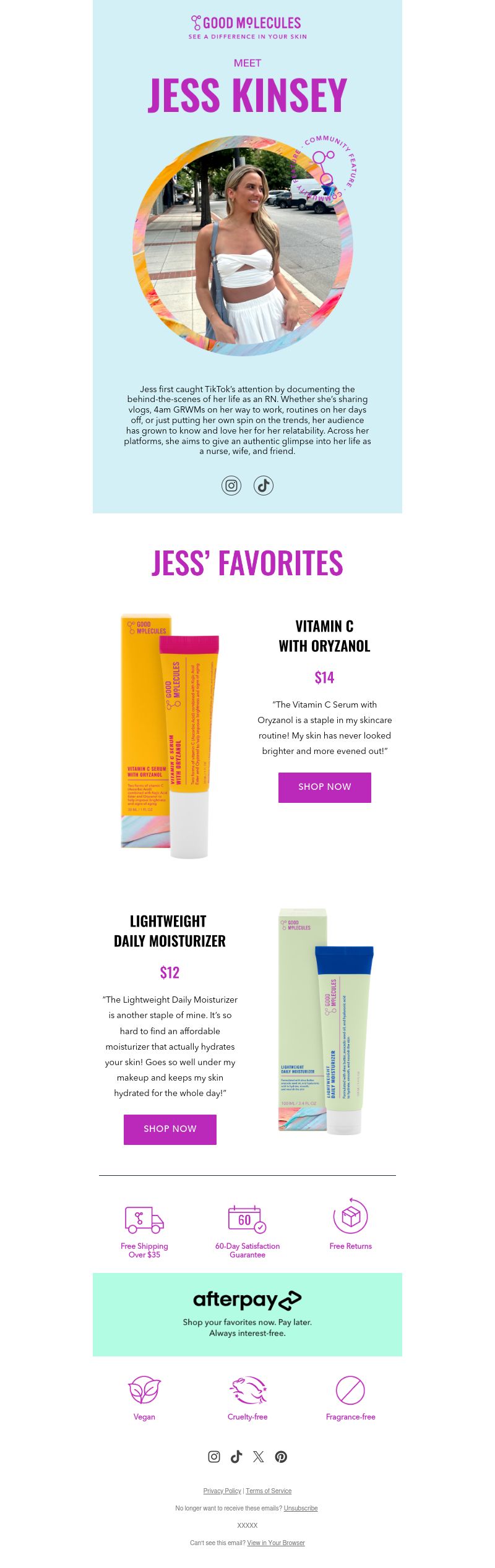
Post-purchase and education flows are often the highest-performing places for these messages because customers are already invested. If the recommendation helps them get more value out of what they bought, it earns its place in automation.
4. Keep abandoned cart automation tight and well-timed
Cart abandonment emails still work because intent already exists. The difference is timing and restraint.
Two emails almost always outperform one. And for most brands, two to four emails is the sweet spot before diminishing returns kick in.
Timing matters more than copy:
The first email should land within the first hour while intent is still high
Follow-ups should space out logically, not stack urgency

Focus on clarity first. Show exactly what was left behind. Address common friction like shipping, returns, or sizing. Incentives can help, but they shouldn’t be the crutch.
High intent doesn’t mean unlimited patience.
5. Use contextual data to automate promotions more intelligently
Promotional automation works best when it responds to context, not just calendar events.
Instead of sending every sale to your entire list, use signals like:
Browsing or category interest
Purchase recency
Inventory levels
Price sensitivity or prior promo engagement

Contextual automation lets you send fewer promos while maintaining performance. It also prevents the “everything is always on sale” problem that trains customers to wait.
Automation should help you make better decisions faster, not flatten nuance.
6. Make email and SMS work together instead of competing
Omnichannel automation works when each channel has a clear role.
Email is best for:
Education
Storytelling
Product context

SMS works best for:
Urgency
Reminders
Time-sensitive nudges

Instead of duplicating messages across channels, design automation so they support each other. For example, an email introduces an offer or product, while SMS follows up with a simple reminder or alert.
When channels feel coordinated, engagement stays high. When they feel repetitive, opt-outs follow quickly.
7. Automate education to reduce churn and returns
One of the most overlooked uses of automation is education.
Helping customers understand how to use what they bought reduces returns, lowers support tickets, and increases repeat purchase rates.
Strong education flows include:
Setup or usage guidance
Care instructions
Common mistakes to avoid
When customers feel confident using a product, they’re far more likely to come back on their own.

8. Treat loyalty automation as relationship building
Loyalty emails shouldn’t feel like another promo with a different subject line.
They work best when they reinforce progress and recognition. Showing customers where they stand, what they’ve unlocked, or what’s coming next creates momentum without relying on discounts.
Automation here should highlight:
Status and milestones
Early access or exclusivity
Progress toward the next tier
The goal isn’t to push another purchase. It’s to make staying connected feel worthwhile.

9. Clean your list before automation amplifies the wrong signals
Automation magnifies whatever list quality you already have.
Sending automated emails to long-term inactives, unengaged subscribers, or outdated addresses hurts deliverability and skews performance data. Regular list hygiene protects everything else you automate.
That means:
Suppressing unengaged subscribers
Limiting re-engagement attempts
Making opt-outs easy
Sometimes the best automation decision is knowing when to stop sending.
Automation works best when it’s intentional
Automation isn’t about removing humans from marketing.
It’s about freeing your team to focus on strategy while the right messages run quietly in the background. When automation is built around behavior, prioritization, and context, it compounds. When it isn’t, it creates noise.
Automate with intention, and everything else works harder.
(Free worksheets) If your retention strategy lives in your head rent-free, this is for you.

Most retention strategies live in people’s heads, scattered docs, and half-built flows.
Which is why they break.
These 8 free worksheets turn Retention Redefined into a real operating system for your brand. You’ll audit your flows, map your lifecycle, clean up segmentation, pair email + SMS correctly, and define the metrics that actually show if retention is working.
If your retention feels hard to manage, hard to scale, or hard to explain to your team... this fixes that.
Quick Clips:
Bloom enters 2026 with clear vision: The viral brand’s new Clear Protein offers 20g of protein and 5g of collagen in a fruit-flavored, juice-like format. Available in Strawberry Watermelon and Raspberry Lemon exclusively at Target.
REI leans into humans, not just AI: While other retailers go all-in on AI, REI is doubling down on its “green vest” employees as trusted advisors; blending digital tools with real-life outdoor expertise.
Mel Robbins launches protein shots for real life: The author and podcaster co-founded Pure Genius Protein, offering 23g of complete protein in a 3.38oz shot. No sugar, no fat, no chalkiness; just convenient nutrition for people on the go.
Kendra Scott appoints new CEO to lead next era of growth: Chris Blakeslee (ex-Athleta, Alo Yoga) takes the helm as CEO. He’s expected to scale the brand through immersive retail, new product lines, and community-driven experiences.
Post-holiday returns pile up: A record $257.8B in holiday online sales also brought a 4.7% spike in returns. With 72% of merchants now charging fees or restricting return options, the once-free perk is getting more complicated.
Annnnd that’s a wrap for this edition!
Thanks for hanging with Chase and me. Always a pleasure to have you here.
If you found this newsletter helpful (or even just a little fun), don’t keep it to yourself! Share ecomemailmarketer.com with your favorite DTC marketer. Let’s get them on board so they don’t miss next week’s drops.
Remember: Do shit you love.
🤘 Jimmy Kim & Chase Dimond
PS - Your next best customer might be reading this right now. Want in? Email Jimmy to sponsor this newsletter and more.
Love this newsletter but want to receive it less frequently? Let us know by clicking here!
Reply