- eCom Email Marketer
- Posts
- Thu 8/13 | Ed 392 | This is the part most educational emails miss
Thu 8/13 | Ed 392 | This is the part most educational emails miss
🌊 Two days that'll change how you run your ecommerce business. Join us at Commerce Roundtable Sept 21-22 → Use code EEMVIP
The best educational emails aren’t trying to win a trivia night.
They’re trying to remove the one thing stopping someone from buying.
Maybe shoppers don’t understand why your ingredient costs more. Maybe they don’t know how your product fits into their routine. Maybe they’ve seen the format before, but still aren’t totally sure it’s for them.
This week, we’re looking at two emails that handle that tension in totally different ways: Fly By Jing uses origin storytelling to make the product feel worth it, while Kind Patches uses a quick-start guide to make the product feel easy to try. Let's dig in.
Also inside:
→ Two educational emails, two playbooks: Fly By Jing leans on origin storytelling, Kind Patches on a quick-start guide.
→ NOON put breakfast in a can, and e.l.f. teamed up with Bubble on a hybrid skincare-makeup drop.
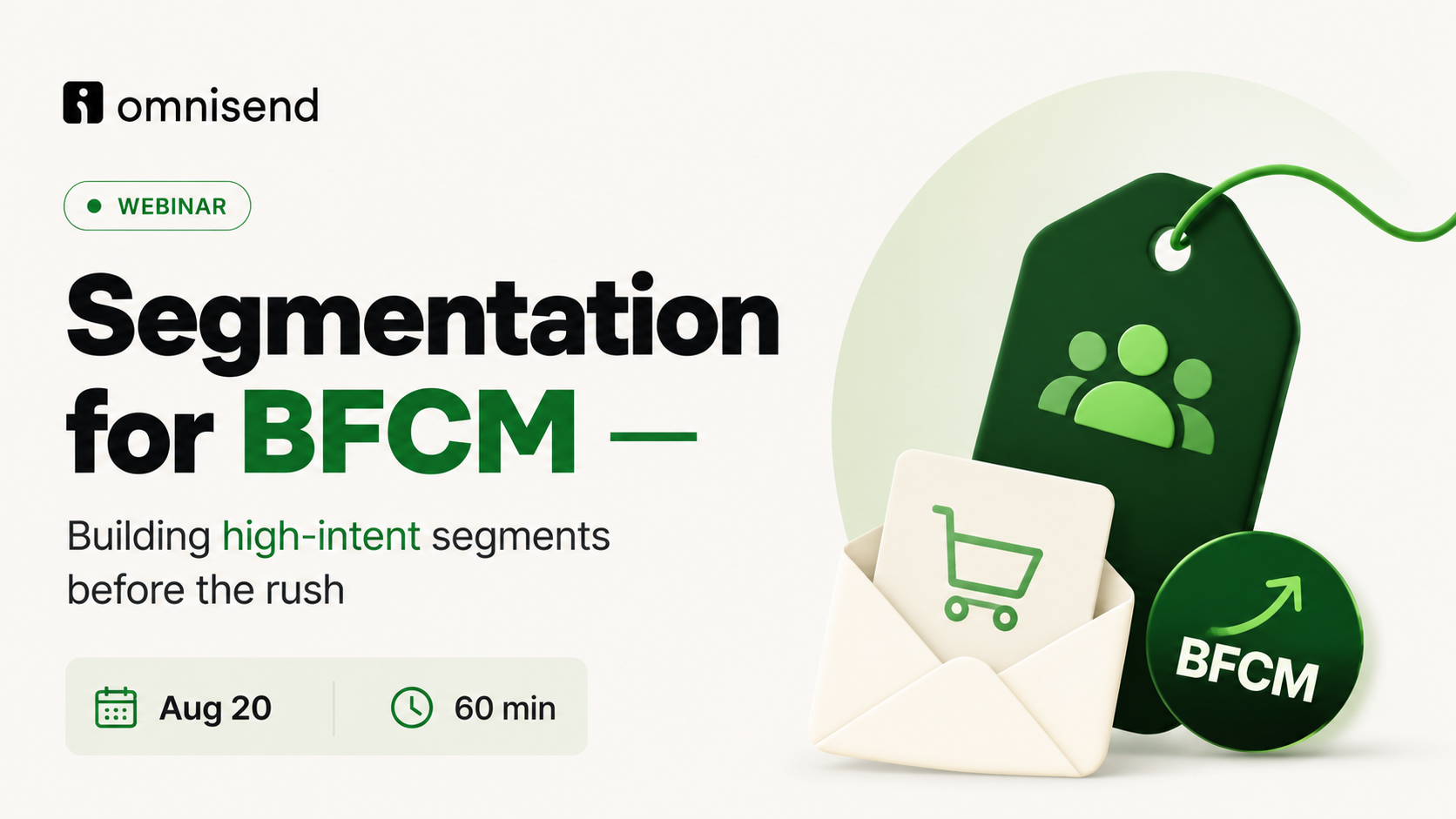
Send the same offer to your whole list, disengaged subscribers and all, and deliverability slips right when you need it most.
Omnisend is hosting a free live session on exactly that: Segmentation for BFCM, August 20. They're gonna walk through building the segments your holiday campaigns will actually lean on.
One hour now saves you a scramble later.
*Sponsored
Educational emails can go wrong fast.
They either over-explain something shoppers don’t care about yet, or they bury the product so deep in the lesson that the email feels more like a brochure than a reason to buy.
But when the education is doing a real job, it can make the product feel more specific, more credible, and easier to choose.
Fly By Jing and Kind Patches both use education as the hook, but they’re solving for different types of hesitation. Fly By Jing is teaching shoppers why its ingredients are rare and worth seeking out, while Kind Patches is teaching shoppers how to use a format that might still feel unfamiliar.
Fly By Jing: Use Education to Build Value
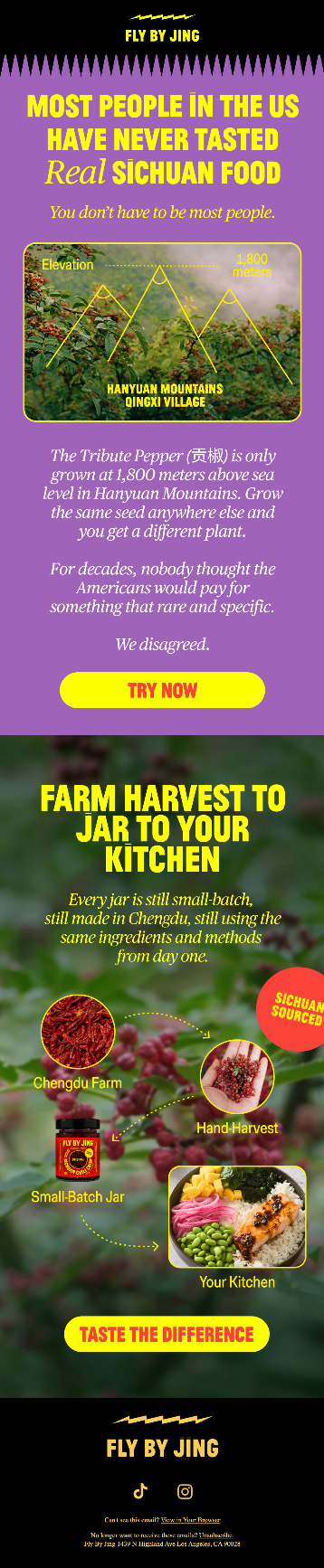
Fly By Jing’s email opens with a strong tension point: most people in the U.S. have never tasted real Sichuan food.
That framing immediately gives the education a purpose. The email isn’t just saying, “Here’s where this pepper comes from.” It’s telling shoppers they may not actually know what the real thing tastes like yet, which makes the product feel like access to something more specific than a pantry staple.
From there, the email builds value in a few ways:
It makes the ingredient place-specific. The Tribute Pepper is grown at 1,800 meters above sea level in the Hanyuan Mountains, and the copy explains that the same seed grown somewhere else becomes a different plant.
It turns sourcing into a taste story. The farm-to-jar section shows the chain from Chengdu farm to hand harvest to small-batch jar to the customer’s kitchen, which helps translate provenance into something the shopper can imagine using.
It creates a bit of tension. “For decades, nobody thought the Americans would pay for something that rare and specific. We disagreed.” gives the email a point of view instead of making it feel like a neutral ingredient lesson.
The opportunity is that the email could make the product entry point slightly clearer. The storytelling is strong, but a shopper who’s new to Fly By Jing may still need a little more direction on what to try first or how to use it once it’s in their kitchen.
What brands can take from it: If your product has a sourcing, ingredient, or craftsmanship story, don’t treat that as background. Use it to explain why the product is different, then connect that difference to what the shopper will experience.
Kind Patches: Use Education to Remove Friction

Kind Patches takes a more practical approach. The email is built like a quick-start guide for someone who might be interested in patches, but doesn’t totally know how they fit into a routine yet.
That’s the right move for a product format that may need some explanation. If someone is used to pills or gummies, the main barrier may not be whether they want the benefit. It may be whether they understand how patches work, how long to wear them, where to place them, and why they’d choose this format instead.
Kind Patches reduces that friction in a few ways:
It gives simple usage rules. The wear tips answer practical questions around consistency, visibility, placement, and applying patches to clean, dry skin.
It compares the format to familiar alternatives. The chart positions patches against pills and gummies, making the benefits easier to understand quickly.
It turns education into direction. The quiz CTA gives unsure shoppers a next step, helping match the product to their goals, routine, and real life.
The comparison chart is useful because it’s not trying to tell a big brand story. It’s trying to make the format feel easier to keep up with: no swallowing, up to 8-hour wear, easy patch format, clean ingredients.
What brands can take from it: If your product format is unfamiliar, education should make the first step feel easier. Teach shoppers how it works, why it’s different, and where they should start.
The Difference Is What the Education Has to Prove
Fly By Jing uses education to make the product feel more valuable. Kind Patches uses education to make the product feel more usable.
That difference matters. Fly By Jing is trying to shift perception around authenticity, sourcing, and taste, so the email teaches shoppers why the ingredient can’t be separated from where it comes from. Kind Patches is trying to make a newer format feel simple, so the email teaches shoppers how to wear it, why it’s easier than alternatives, and how to find the right patch.
Before you write an educational email, the question isn’t just “what can we teach?” It’s “what does the shopper need to understand before they’re ready to buy?”
Sometimes the answer is the story behind the product. Sometimes it’s how to use it. Sometimes it’s why this version is different from everything else on the shelf.
The best educational emails don’t just make shoppers more informed. They make the next step feel more obvious.
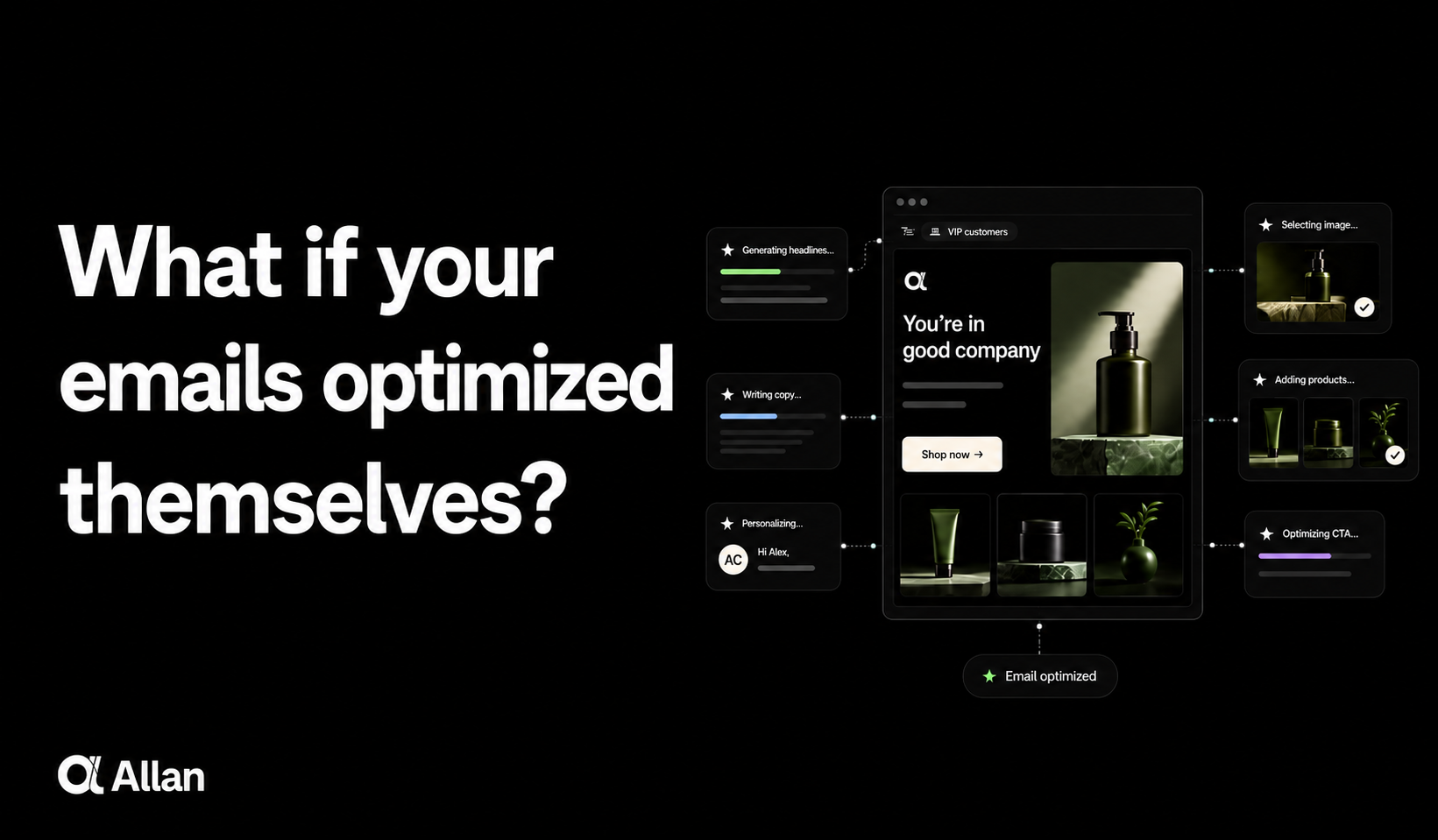
You A/B tested two subject lines and called it a win, but all 50,000 people still opened the same email.
Allan tests every element instead. Your designer uploads blocks (heroes, copy, CTAs, product), and Allan assembles the best combination for each subscriber at send time, learning from every send. It sits on top of Klaviyo, so nothing moves.
The best email isn't one winner. It's a different winner for everyone.
*Sponsored
NOON wants to pour your breakfast out of a can.
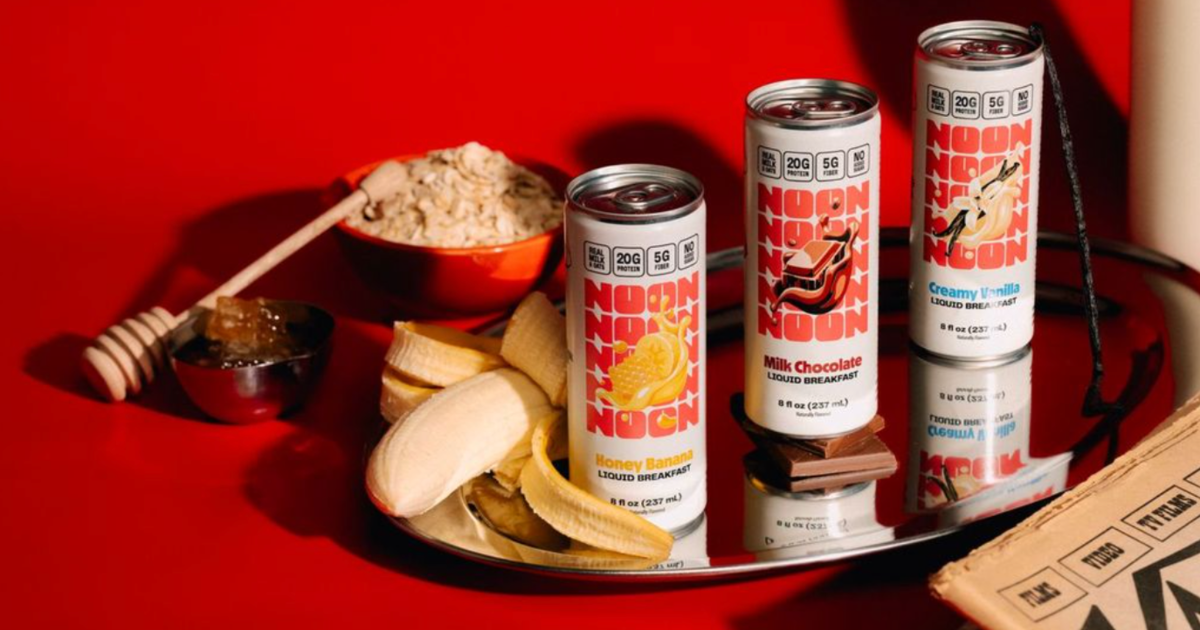
NOON just rolled into Target nationwide with a shelf-stable "breakfast in a can" in Vanilla, Milk Chocolate, and Honey Banana, each with 20g protein and 0g added sugar. A big swing off a fresh $2.5M seed round.
e.l.f. and Bubble built the collab their fans basically ordered off the menu.
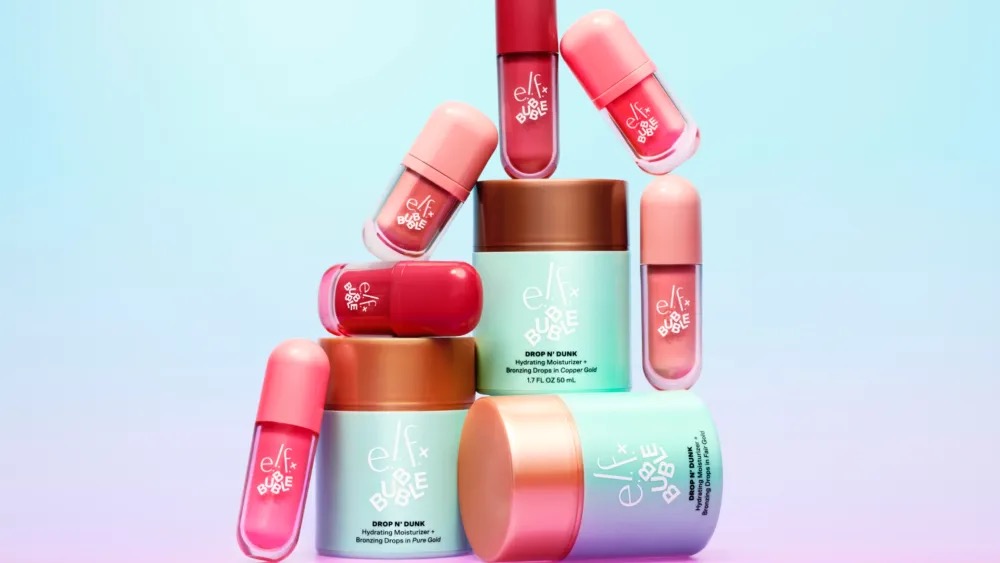
The two beauty brands are blurring skincare and makeup into hybrid "holy grails" like Drop N' Dunk and Glow Talk, hitting their own sites Aug 7 before Target on Aug 9. The collab-drop playbook at full speed.
Reply