- eCom Email Marketer
- Posts
- Wed 8/12 | Ed 391 | The Retention Leaks Costing You the Most Money Before BFCM
Wed 8/12 | Ed 391 | The Retention Leaks Costing You the Most Money Before BFCM
📬 Your BFCM swipe file: 1.5M+ Shopify brand emails with AI breakdowns. → Explore Inboox
Everyone's talking about Black Friday strategy right now. More campaigns, bigger offers, better creative.
But before you add another send to your calendar, it's worth asking a different question: is your retention program actually ready for the traffic that's coming?
We put together seven of the biggest retention leaks we see heading into Q4, from weak welcome flows and disconnected post-purchase journeys to overlooked segmentation and deliverability issues. Fixing these now will do far more for your holiday performance than another last-minute promotion ever could.
Plus, keep scrolling to download our retention leak scorecard.
Also inside:
→ The retention leak hiding in the 88% of carts your flows never recover.
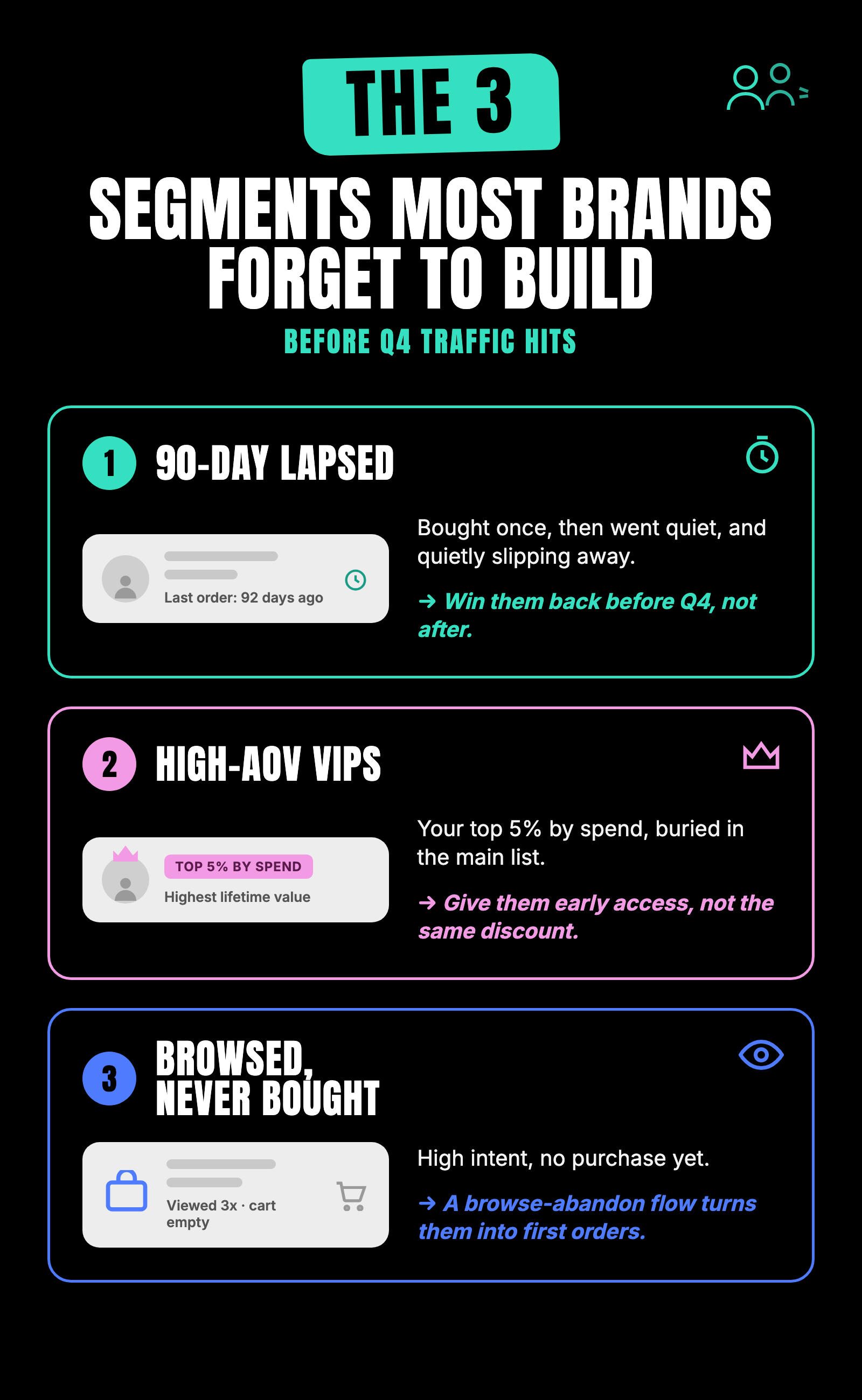
→ The 3 audience segments most brands forget to build before Q4.
→ Your holiday list is about to spike. So is your Klaviyo bill.
→ Reformation goes public, food-merch collabs are everywhere, and another DTC brand gets acquired.
You've audited the flow, tightened the copy, added the SMS. And it still tops out around 12% on a good day.
The other 88% aren't ignoring you because your emails are bad; they're just done checking their inbox.
Outcraft AI adds the one channel your flow can't reach: the phone.
An AI voice agent calls abandoned checkouts within minutes, handles the questions in a real conversation, and coordinates the SMS and email follow-up from the same brain.
Plus, it runs on top of the email and SMS you already send, not instead of it.
Pulsetto added 18% revenue on top of their existing traffic with it.
→ Hear what recovered revenue sounds like at outcraft.ai
*Sponsored
Everyone's busy writing Black Friday campaigns, but the revenue leak is usually in who you're sending them to. These three segments are sitting in your list right now, unbuilt.
Black Friday doesn't create retention problems; it exposes them.
Every weak flow, missed automation, and generic customer experience becomes much harder to ignore once your traffic starts climbing and your inbox volume doubles.
August is one of the last opportunities to identify those leaks while there's still enough time to test, optimize, and measure the impact. If you wait until October, every change feels riskier, and you'll likely spend the holidays reacting to problems instead of maximizing performance.
Here are seven areas worth auditing before the busiest season of the year.
1. Your Welcome Flow Can't Depend on a Discount to Do All the Selling
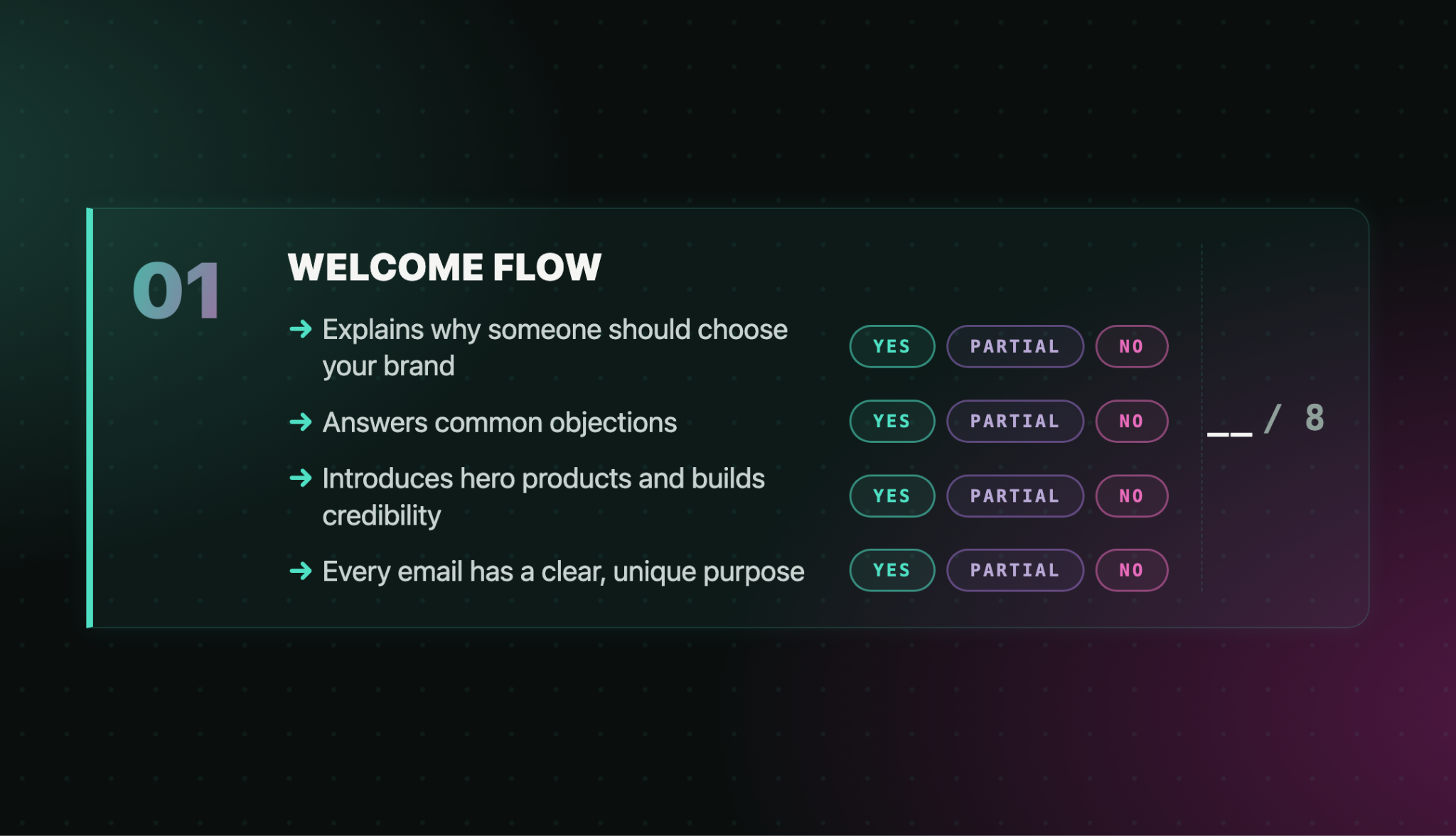
More traffic won't fix a weak welcome flow. If every email revolves around the same offer, you're missing opportunities to build trust, answer objections, and show customers why your product is worth buying. Before Q4, make sure every email moves someone closer to purchasing instead of repeating the same promotion.
- Does your welcome flow explain why someone should choose your brand?
- Are you answering common objections before they become reasons not to buy?
- Are you introducing hero products, social proof, and customer outcomes?
- Does every email have a clear purpose?
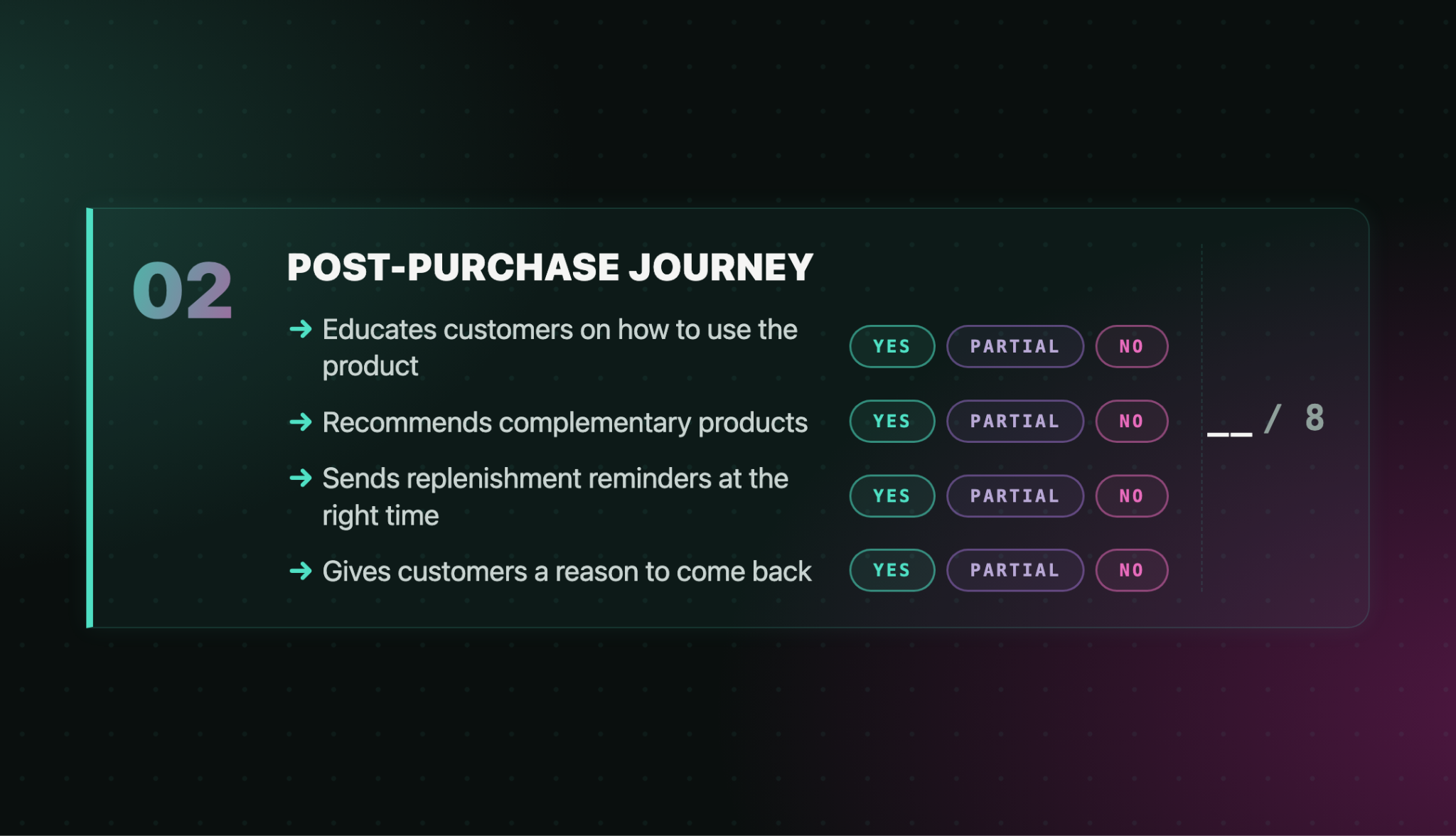
2. Your Post-Purchase Journey Ends Too Soon
The first purchase should start the relationship, not end it. Your post-purchase emails should help customers succeed with what they bought while naturally introducing what's next.
- Are you educating customers on how to use the product?
- Are you recommending complementary products at the right time?
- Are replenishment reminders based on realistic usage?
- Are you giving customers a reason to come back before the next promotion?
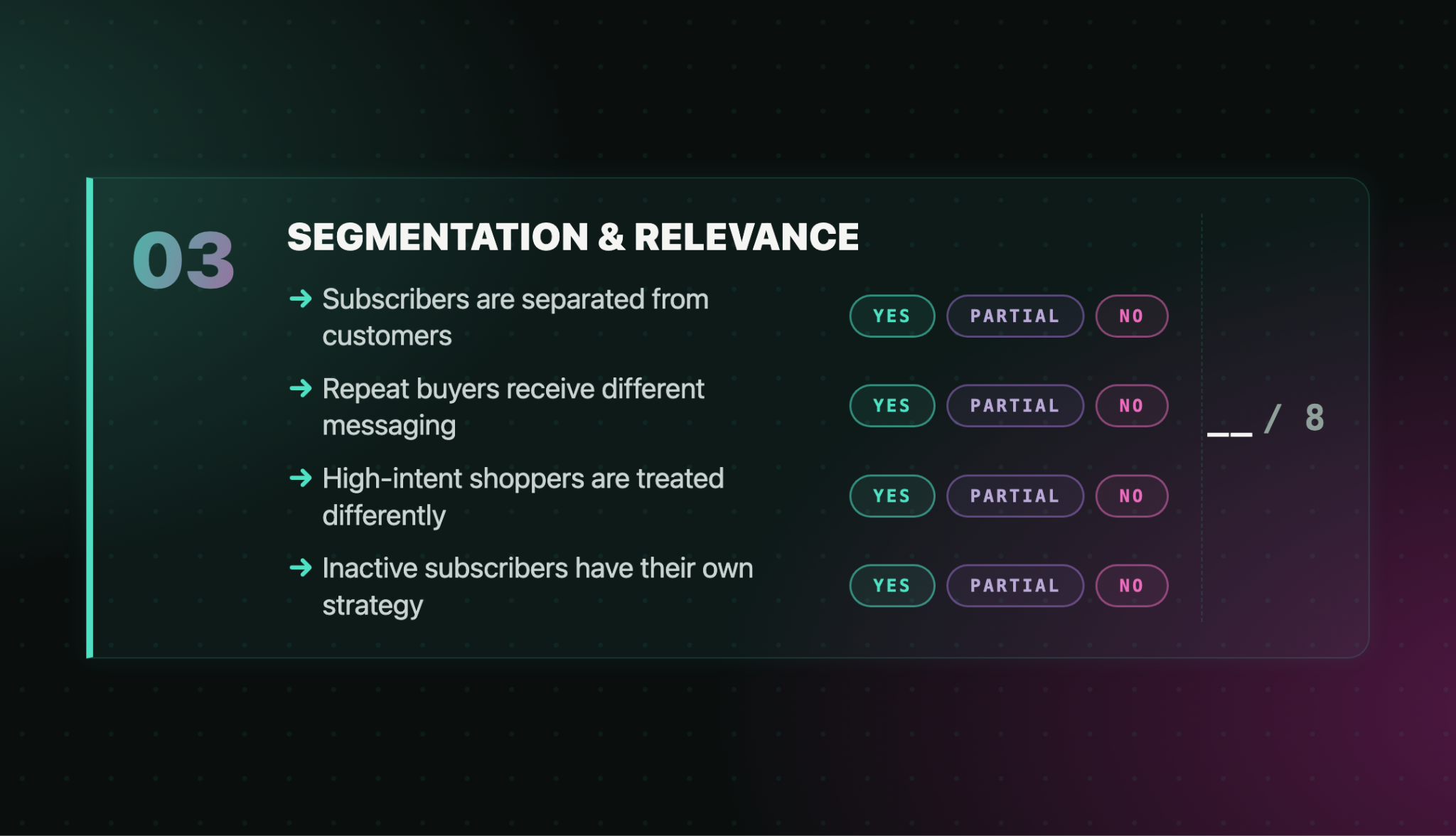
3. Everyone Gets the Same Experience
Generic messaging becomes more expensive as your list grows. You don't need dozens of segments, but subscribers, first-time customers, repeat buyers, and inactive contacts shouldn't all receive the same emails.
- Are subscribers separated from customers?
- Do repeat buyers receive different messaging?
- Are high-intent shoppers treated differently than casual browsers?
- Do inactive subscribers have their own strategy?
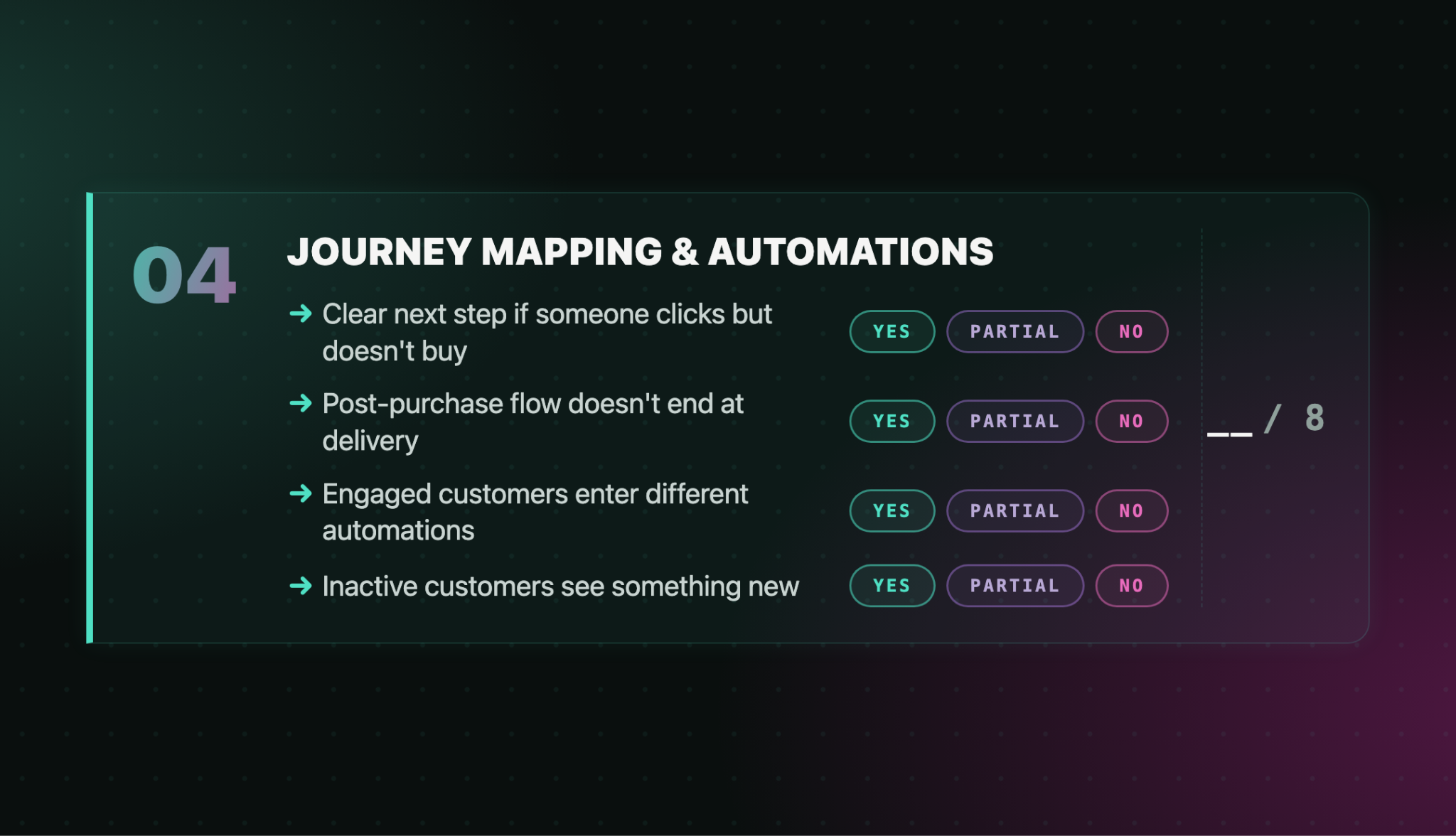
4. Your Campaigns Aren't Connected
Every campaign should lead somewhere. Whether someone opens, clicks, purchases, or ignores an email, there should be a logical next step that keeps the customer moving through their journey.
- What happens if someone clicks but doesn't purchase?
- What happens after someone buys your hero product?
- Are engaged customers entering different automations?
- Are inactive customers seeing something new?
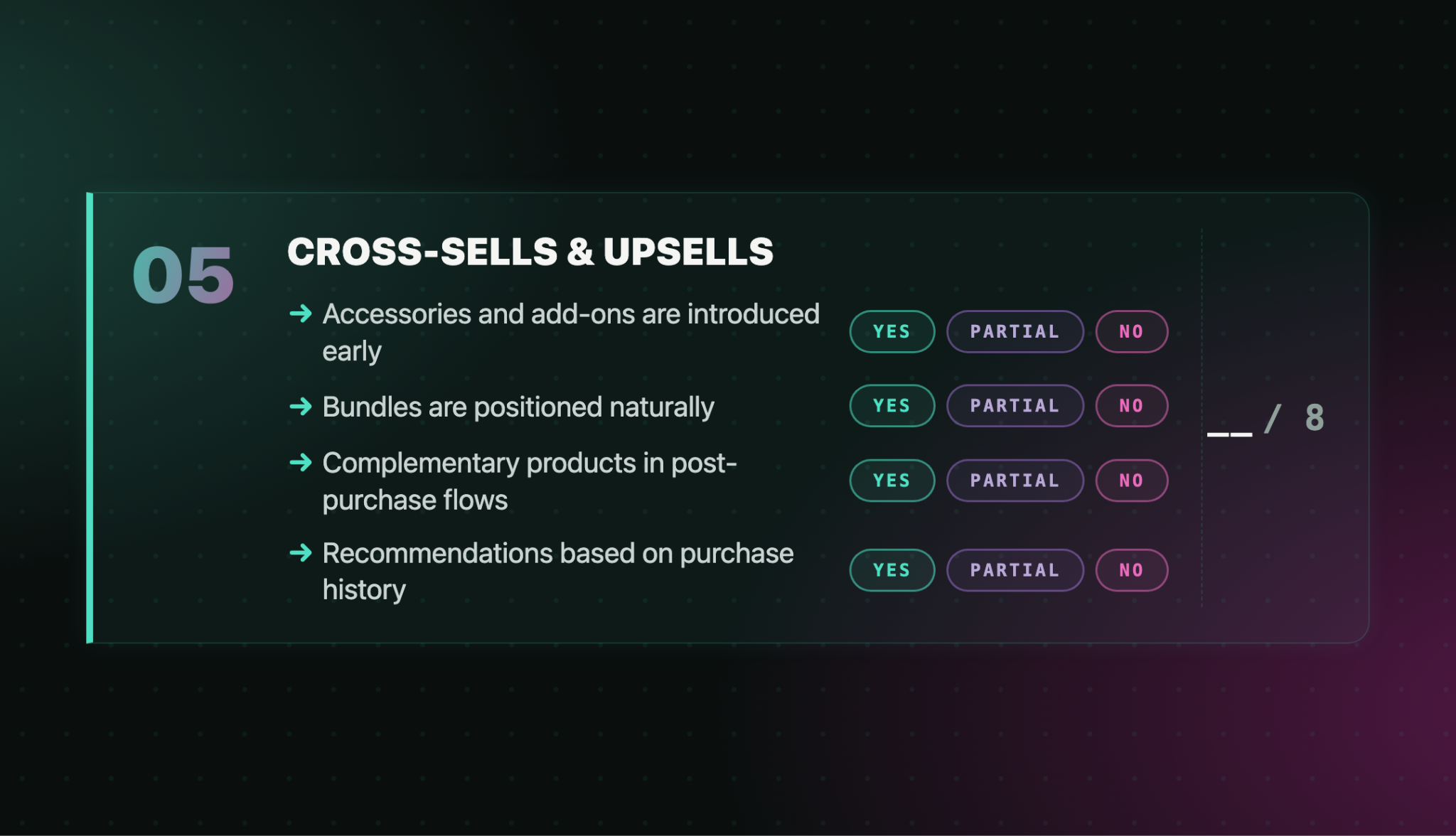
5. Your Cross-Sells Come Too Late
Some of the best cross-sell opportunities happen while customers are still excited about their purchase. Recommend products that naturally improve what they already bought instead of waiting weeks to ask for another sale.
- Are accessories introduced early?
- Are bundles positioned naturally?
- Are complementary products included in post-purchase flows?
- Are recommendations based on previous purchases?
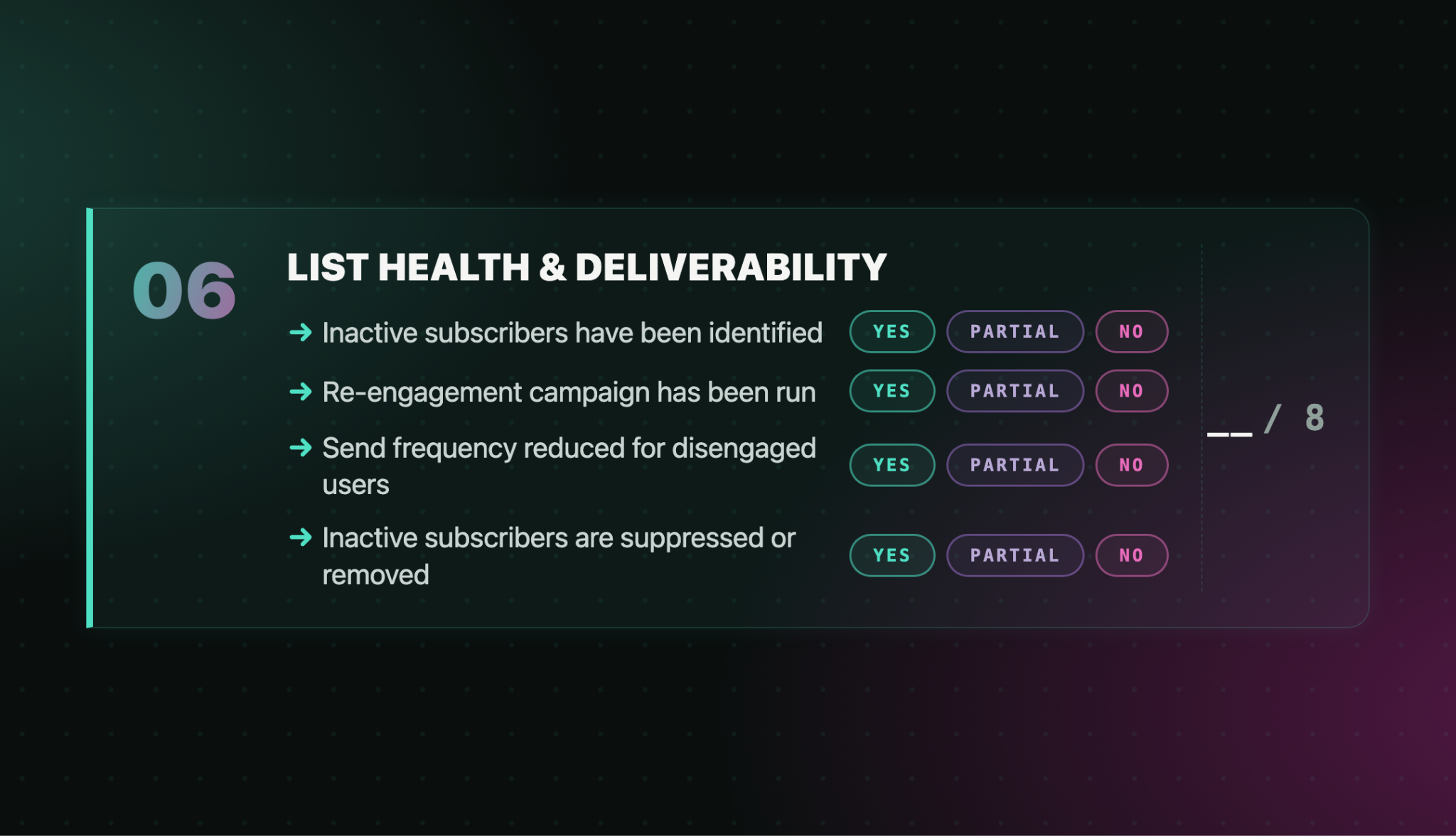
6. Your List Is Bigger Than It Is Healthy
Sending every campaign to disengaged subscribers hurts deliverability when it matters most. A smaller, healthier list usually performs better during Q4 than a larger inactive one.
- Have you identified inactive subscribers?
- Are you running a re-engagement campaign?
- Have you reduced send frequency for disengaged audiences?
- Are you suppressing subscribers who remain inactive?
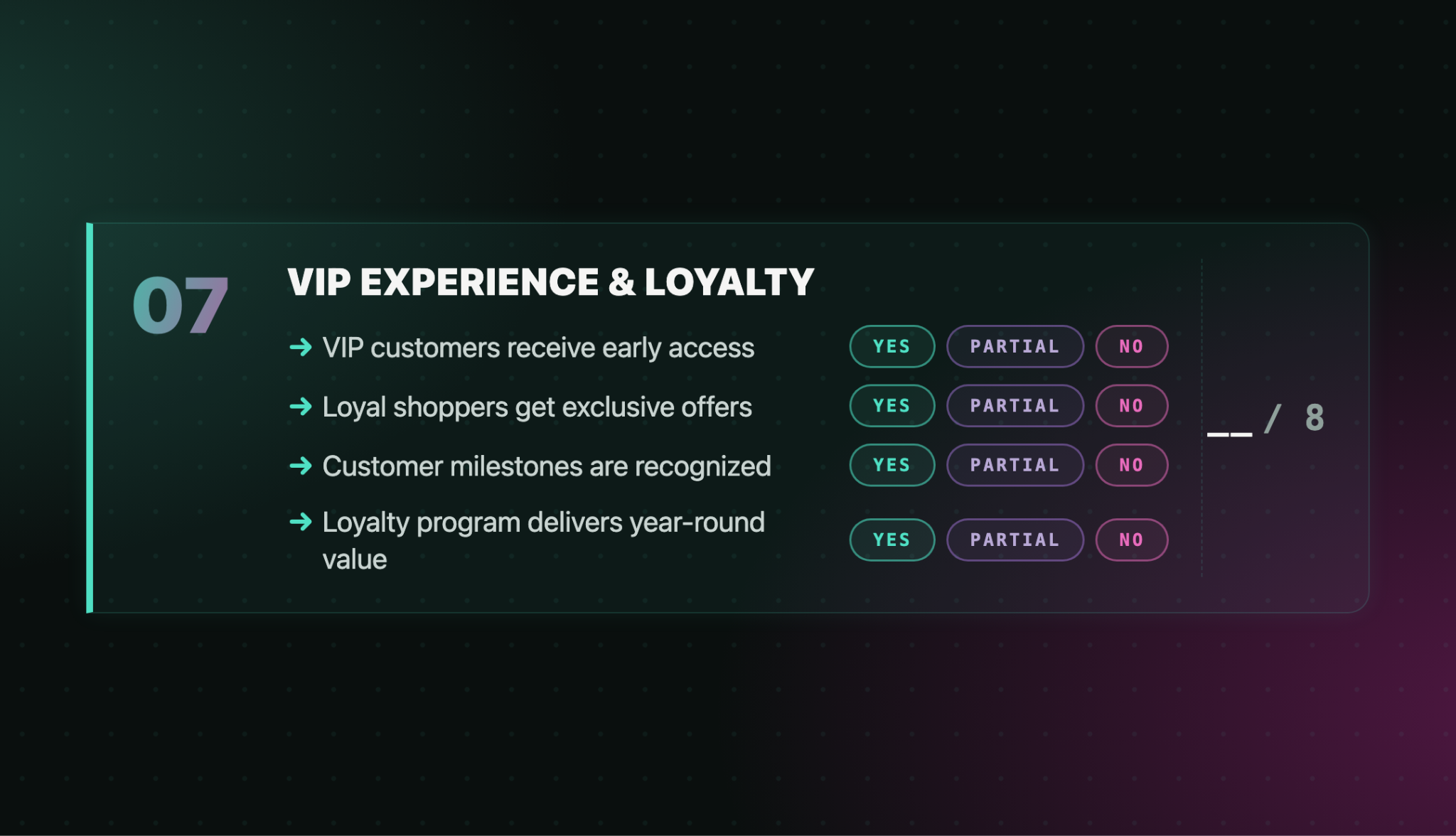
7. Your Best Customers Feel Like Everyone Else
Your VIPs shouldn't receive the same experience as first-time subscribers. Early access, exclusive products, and loyalty perks often drive more revenue than another blanket discount.
- Are VIP customers getting early access?
- Do loyal shoppers receive exclusive offers?
- Are you recognizing customer milestones?
- Does your loyalty program feel valuable year-round?
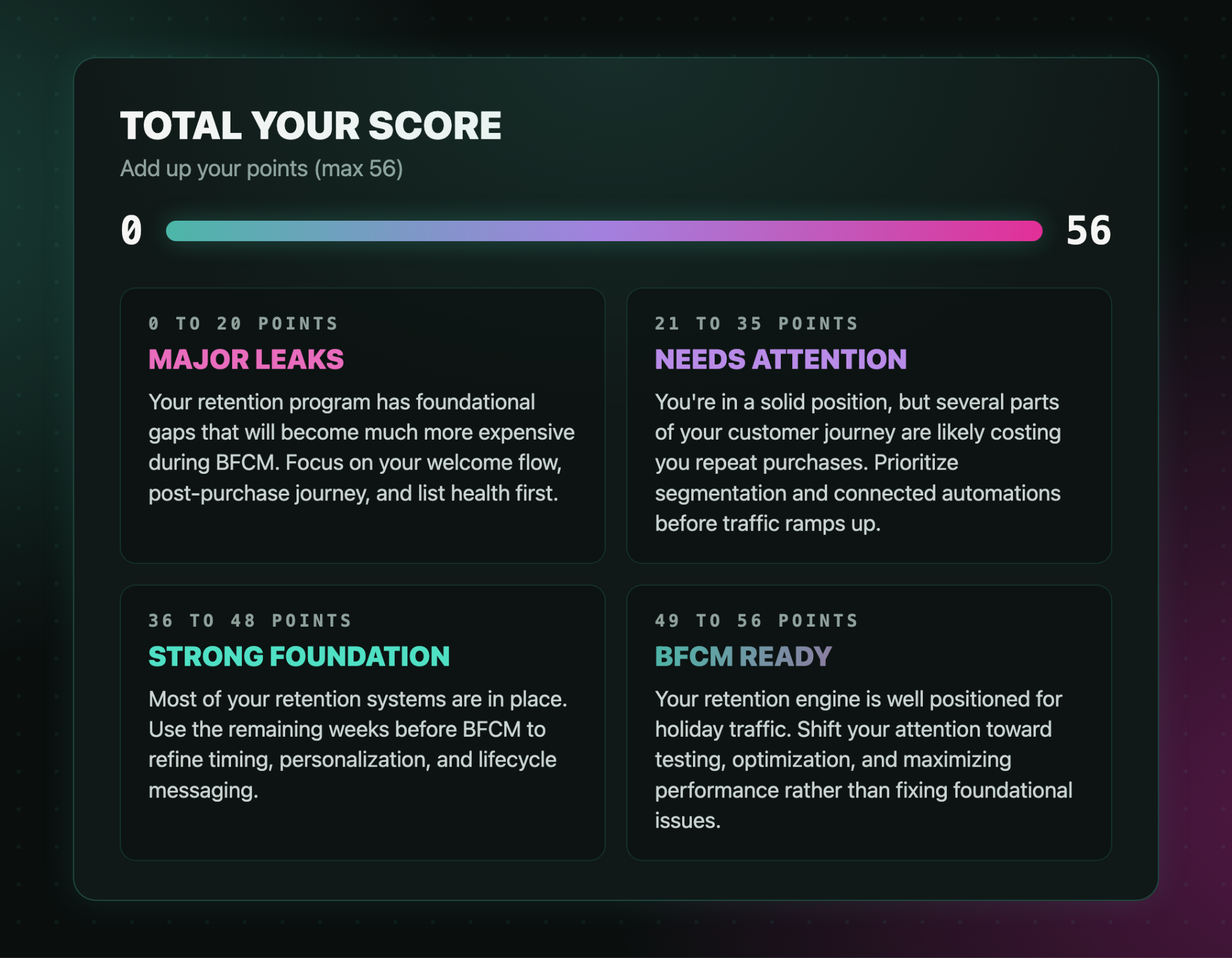
Find your audit score
Black Friday doesn't expose your strongest systems. It exposes your weakest ones. The work you do in August and September gives every campaign a better chance of reaching the right customer with the right message once holiday traffic arrives.
Audit these seven areas now, fix the biggest leaks first, and you'll head into BFCM with a retention program that's built to handle the busiest season of the year.
(BONUS) Download the full retention leak scorecard here.
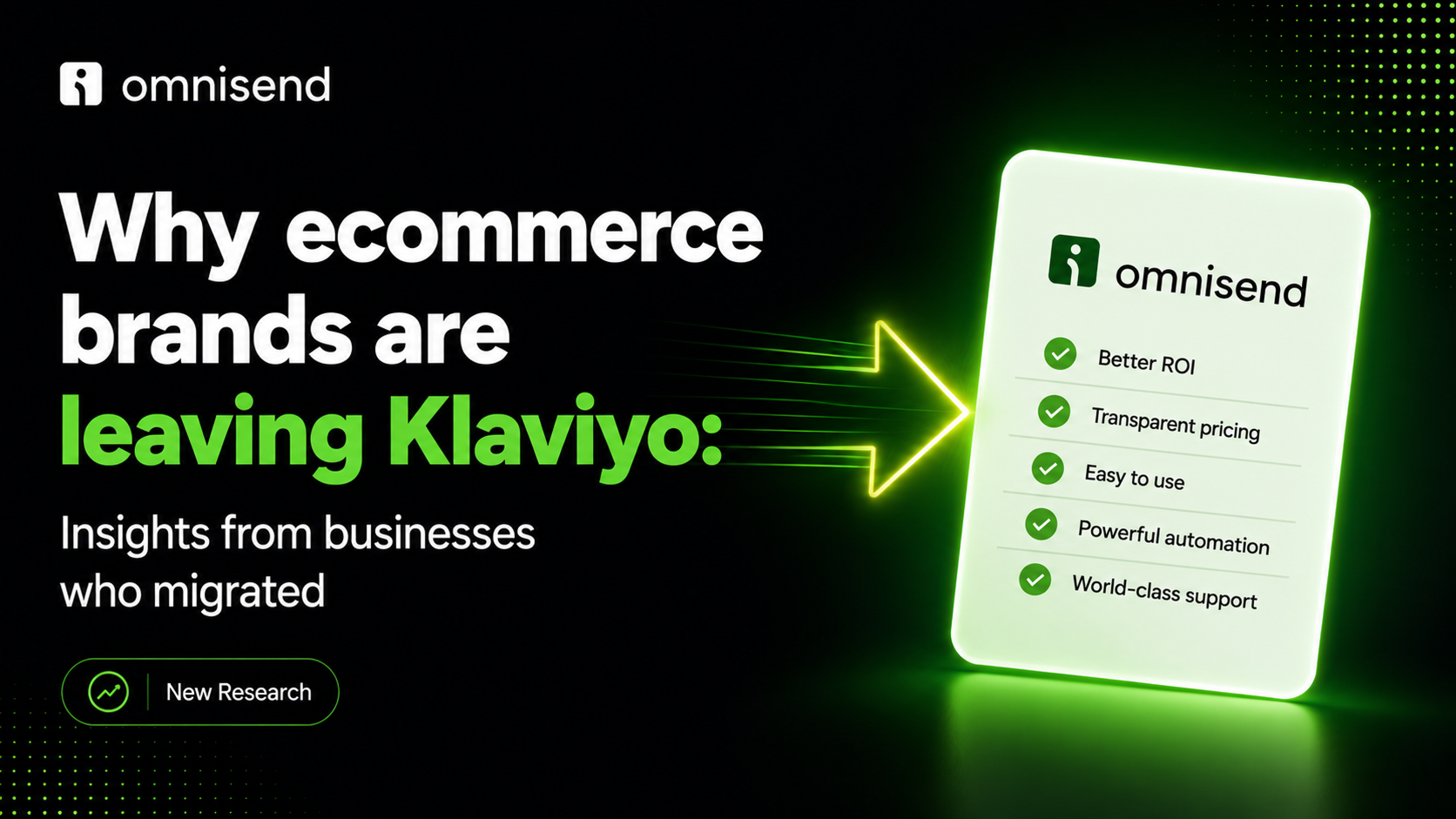
Every subscriber you capture for Black Friday is one more you pay to email, and on Klaviyo that adds up fast.
Omnisend runs all your favorite email and SMS features at more affordable pricing, and their new MCP even lets ChatGPT or Claude build and launch campaigns right inside your account.
So when your list spikes for Black Friday, it's your revenue that scales, not your bill.
Same power, smaller bill, and now an AI that does the busywork.
→ See the numbers at omnisend.com
*Sponsored
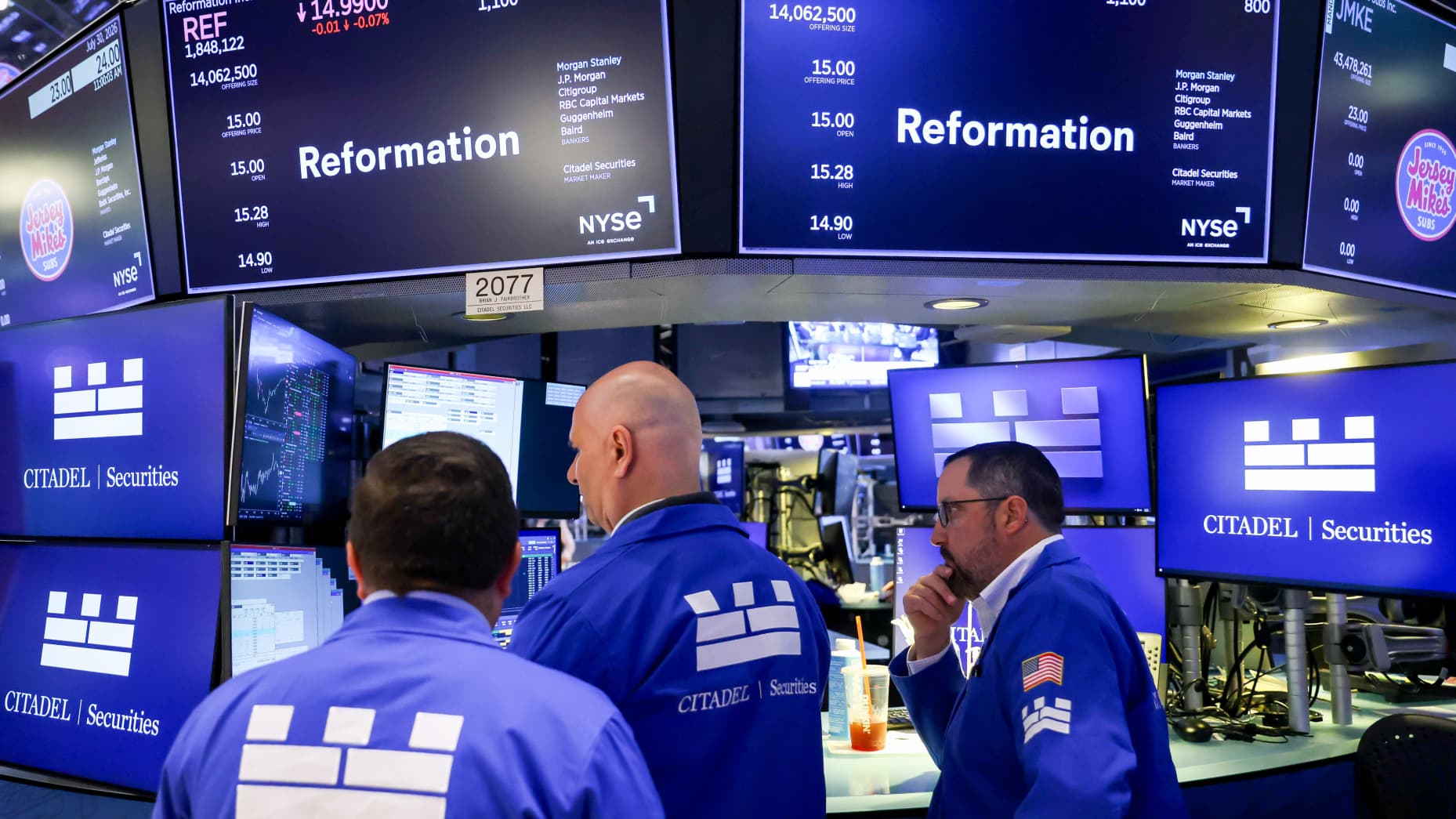
Reformation went public, and DTC's IPO window cracked back open
Reformation priced its IPO at $15 and started trading on the NYSE under REF, raising $210.9 million. With Tailored Brands and Shein also lining up, DTC-apparel IPOs are officially back.
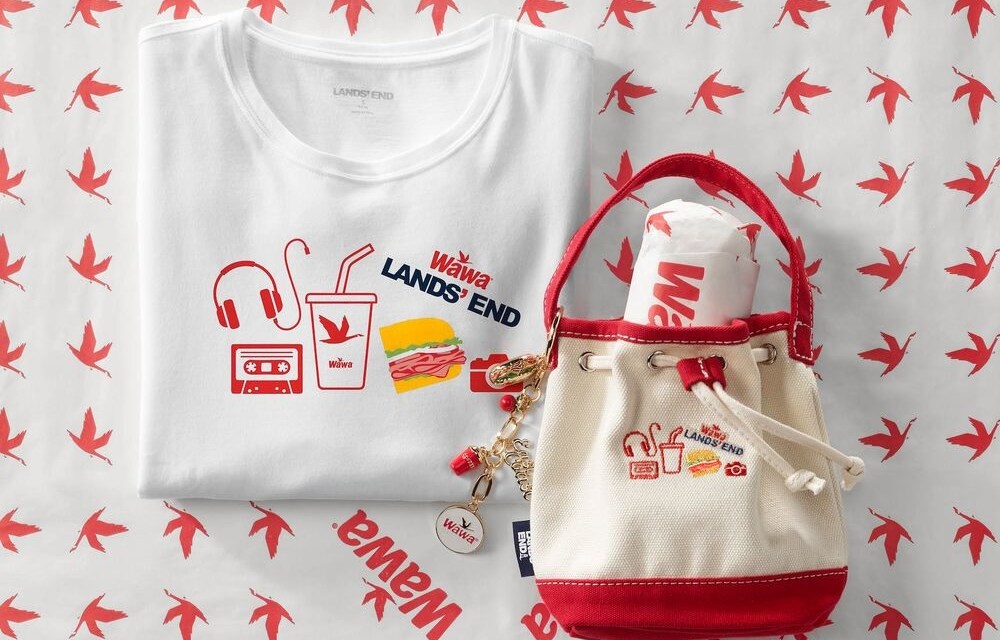
It's the summer of food-merch collabs
Gap x Los Tacos No. 1, Dunkin’ x Chelsea Parke, Starbucks x Dandy, all within weeks. As Modern Retail notes, these limited apparel drops are pure resale-hype acquisition plays.
Snitch didn't build a women's line, it bought one
Snitch, the Shark Tank India menswear brand, acquired women’s label Berrylush to jump into womenswear in one move instead of building from scratch. The DTC roll-up playbook, live.
Reply