- eCom Email Marketer
- Posts
- Wed 8/26 | Ed 401 | How to Earn the Second Order (Before the First One Even Lands)
Wed 8/26 | Ed 401 | How to Earn the Second Order (Before the First One Even Lands)
You can read about what happened in San Diego, or you can be in the room. Grab your Commerce Roundtable ticket before it's too late. → Use code EEMVIP for 40% off
There's a four day window after checkout where someone actually wants to hear from you... and you're using it to send a tracking number.
Think about the last thing you ordered online. The good one, not the Amazon toothpaste refill. The one where you checked the tracking like it might have moved in the last four minutes.
What the brand sent: a receipt, a tracking number, and about a week later, a request to leave a review. That's the whole relationship, during the only stretch where your attention was free.
So this morning, four brands that use the window properly, from a juice company to a vet who started a dog food brand. 👇
Also inside:
→ The question your abandoned carts never got to ask
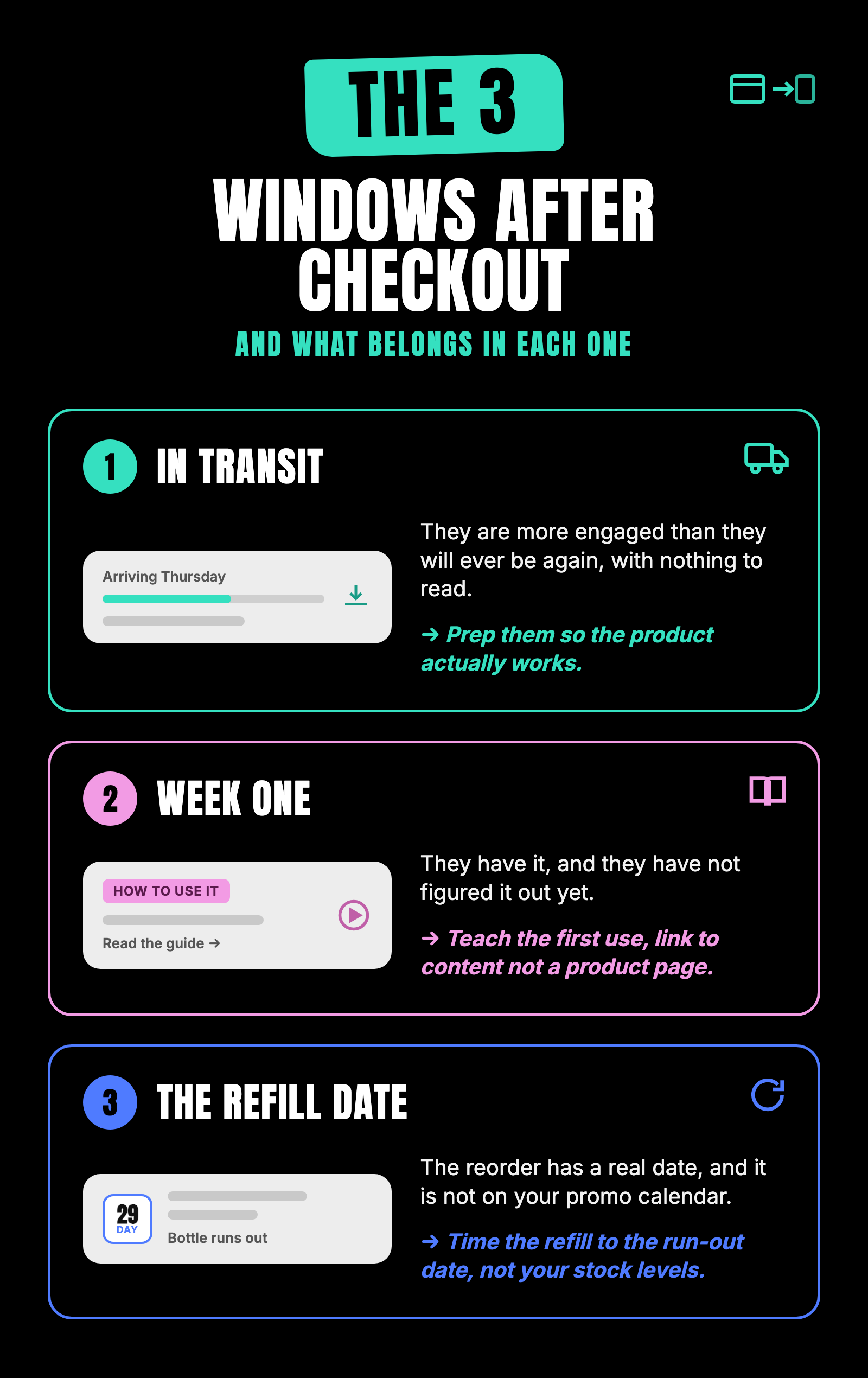
→ The three windows after checkout, and what belongs in each one
→ How a paintball brand turned a quiet 60,000 person list into 20% of store revenue
→ Samsonite bought most of BÉIS, AG1 keeps adding formats, and back to school is thinner than the forecast
Somewhere between "add to cart" and "place order," your customer may have had a question.
Your email flow can't answer it and neither can your texts. They can remind, nudge, and discount, but they're one way, and the shopper who hesitated at checkout usually isn't waiting for a reminder.
They're waiting for an answer about sizing, shipping, or whether this will actually work for them.
Outcraft AI adds the one channel built for answers - the phone.
A voice agent calls opted-in abandoned checkouts within minutes, while the tab is practically still open, to answer the question, handle the objection, and close the sale, then coordinates the follow-up so nothing repeats.
It runs on top of the flows you already send, not instead of them.
→ Hear a real checkout-recovery call at Outcraft AI
*Sponsored
Most post-purchase flows spend it on a receipt, a shipping notice, and a review request. There are three separate windows in there, and each one wants a different email.
A customer who ordered three days ago is the warmest audience you will ever have, warmer than your VIP segment and warmer than anyone who has ever clicked an ad, and that state has a shelf life of about a month before they go back to being a name you have to pay to reach.
The four sends below all landed inside that window, and none of them leans on a discount to justify itself. What's worth copying is less the creative than the job each one was built to do.
1. Pulp & Press: Use the shipping window to protect the outcome
Subject line: It's time to get cleanse-ready!
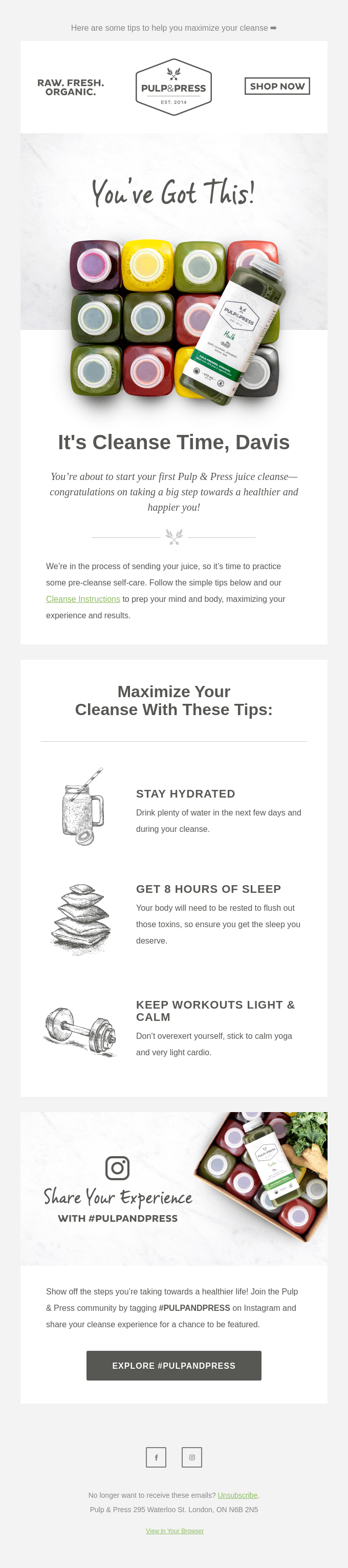
A juice cleanse is one of those products that can fail on the customer's end, and when it does the brand almost never finds out why. Someone who goes into the week underslept and keeps training hard has a rough few days, decides the whole thing wasn't worth it, and never orders again, and none of that surfaces anywhere except a second purchase that doesn't happen.
Pulp & Press gets ahead of it by sending the prep email while the juice is still in transit, so the customer arrives at day one rested and knowing roughly what to expect. Those in-transit days are also the most engaged that customer will ever be, sitting on an order they're excited about with nothing to read, and a prep email is one of the very few things you can send into that gap without it feeling like you're selling to them again.
What to steal: if your product can be used wrong, send the how-to-get-ready email while it's still shipping instead of waiting until it lands.
2. ILIA: Put the cross-sell inside the how-to
Subject line: How to Use Your New Multi-Stick
Preheader: The one tube we can't live without.
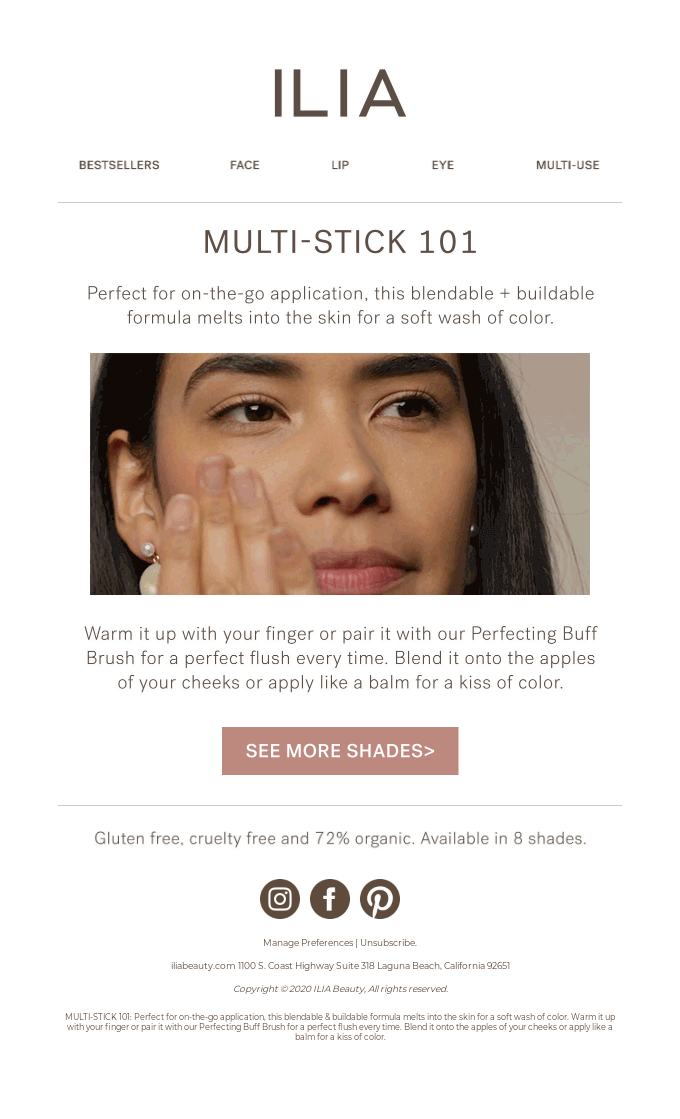
A lot of beauty products get written off after one clumsy application, and the customer who writes yours off will rarely tell you about it. She doesn't complain and she doesn't leave a review, she just never buys it again, and the brand files that away as a product problem when it was closer to an instructions problem.
ILIA heads that off by teaching the application first, and then does something smart with the space underneath, because the product it recommends next is the one that pairs with what she already owns. Arriving at the end of an email that has already been useful, that recommendation reads as the logical next step and borrows the credibility of the advice above it, where the identical product in a standalone promo would have to earn the attention from scratch.
What to steal: teach the thing they just bought, then name what it works with, because a cross-sell sitting inside a how-to reads as a recommendation and costs you nothing to place there.
3. Sundays: Send into the stretch where it might not be working
Subject line: Checking in
Preheader: How's the switch going?
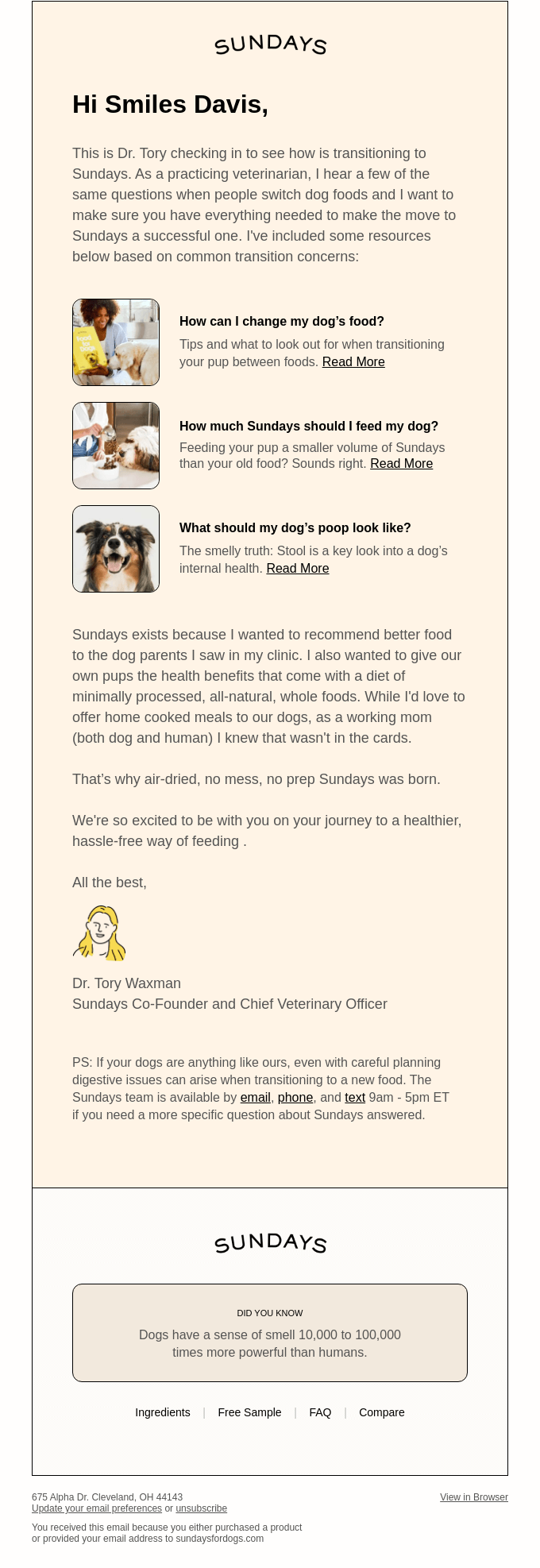
Every product has a stretch where the customer is most likely to give up on it, and with dog food that stretch is the changeover, which takes a week or two and rarely goes perfectly smoothly. The dog is unconvinced, digestion shifts while it adjusts, and the owner starts wondering whether an expensive decision was the right one. Hardly any of those people get in touch. They work through the bag, go back to whatever they were buying before, and the brand ends up with a customer who simply didn't reorder and no idea what happened.
Sundays sends into the middle of that, and signs the email from Dr. Tory, the veterinarian who founded the company, which is the part worth borrowing. Reassurance about a dog's digestion carries more weight coming from a vet than from a marketing address, and the questions being answered are the slightly embarrassing ones people would rather not raise themselves. Mild confusion doesn't generate support tickets, it generates customers who drift off without ever saying so, and that is a considerably harder thing to see in a dashboard.
What to steal: work out where your product is most likely to fail on the customer's end, send an email into that window before they've made up their mind, and sign it from whoever has the most authority to reassure them.
4. Riven: Time the refill to the run-out date
Subject line: 🚨 LIMITED STOCKS - Get more bottles now!
Preheader: Ensure you never run out of your go-to probiotic oral health essential.
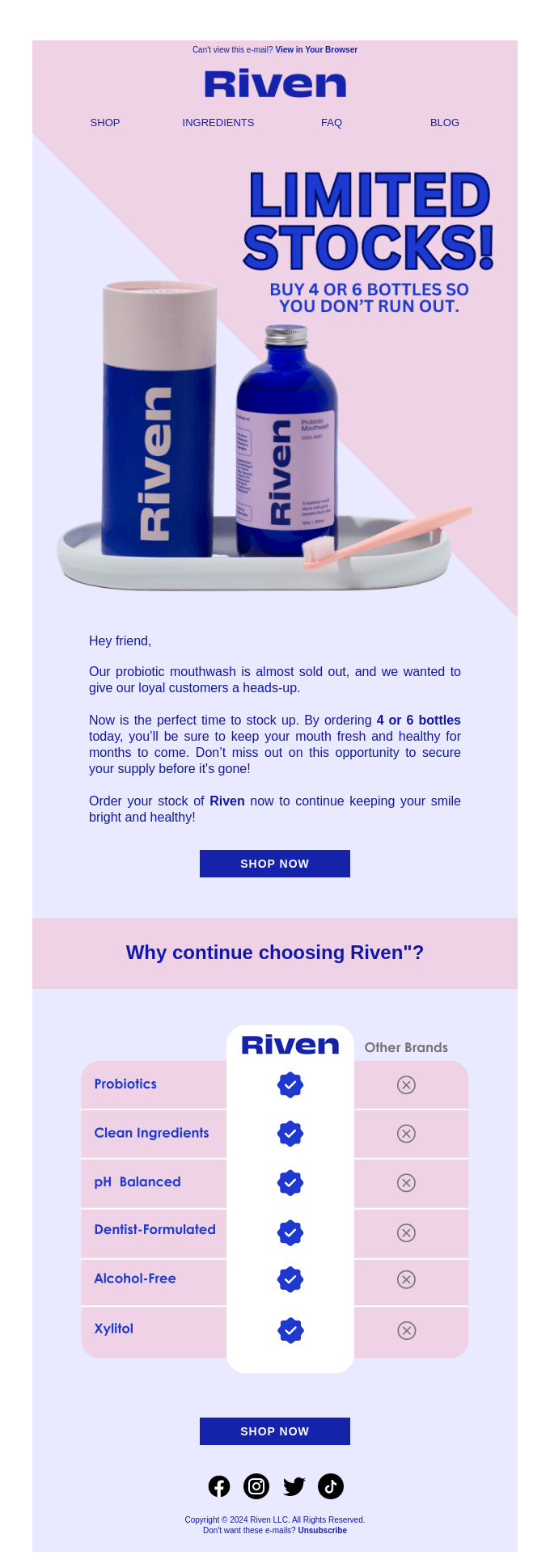
Riven has the ask right, because a consumable's second order should be larger than its first and a multi-bottle bundle is how you get there. Where it wobbles is the reason bolted onto the ask, which is a warning about stock levels rather than anything happening in the customer's life.
Scarcity is a card you can only play so often, and a customer who has read "almost sold out" twice will treat the third one as marketing rather than news, which spends a little of the trust you would much rather still have in November. The preheader is carrying the stronger argument on its own, which is simply that they shouldn't run out, and unlike your stock levels that reason works every single time you send it. Every reorder has a genuine date sitting behind it, the day the bottle runs dry, and you can work that date out from the size of the product and how fast people get through one.
What to steal: build the reorder around the run-out date and lead with the multi-pack as a convenience rather than a scramble, keeping scarcity for the times it happens to be true.
The month you already paid for
Prep them while it ships, teach them how to use it once it lands, check in through the stretch where it might not be working, and time the refill to the day they'll actually run out. None of those sends needs a promotion behind it to earn its place on the calendar, and every one of them happens inside a month you have already paid for.
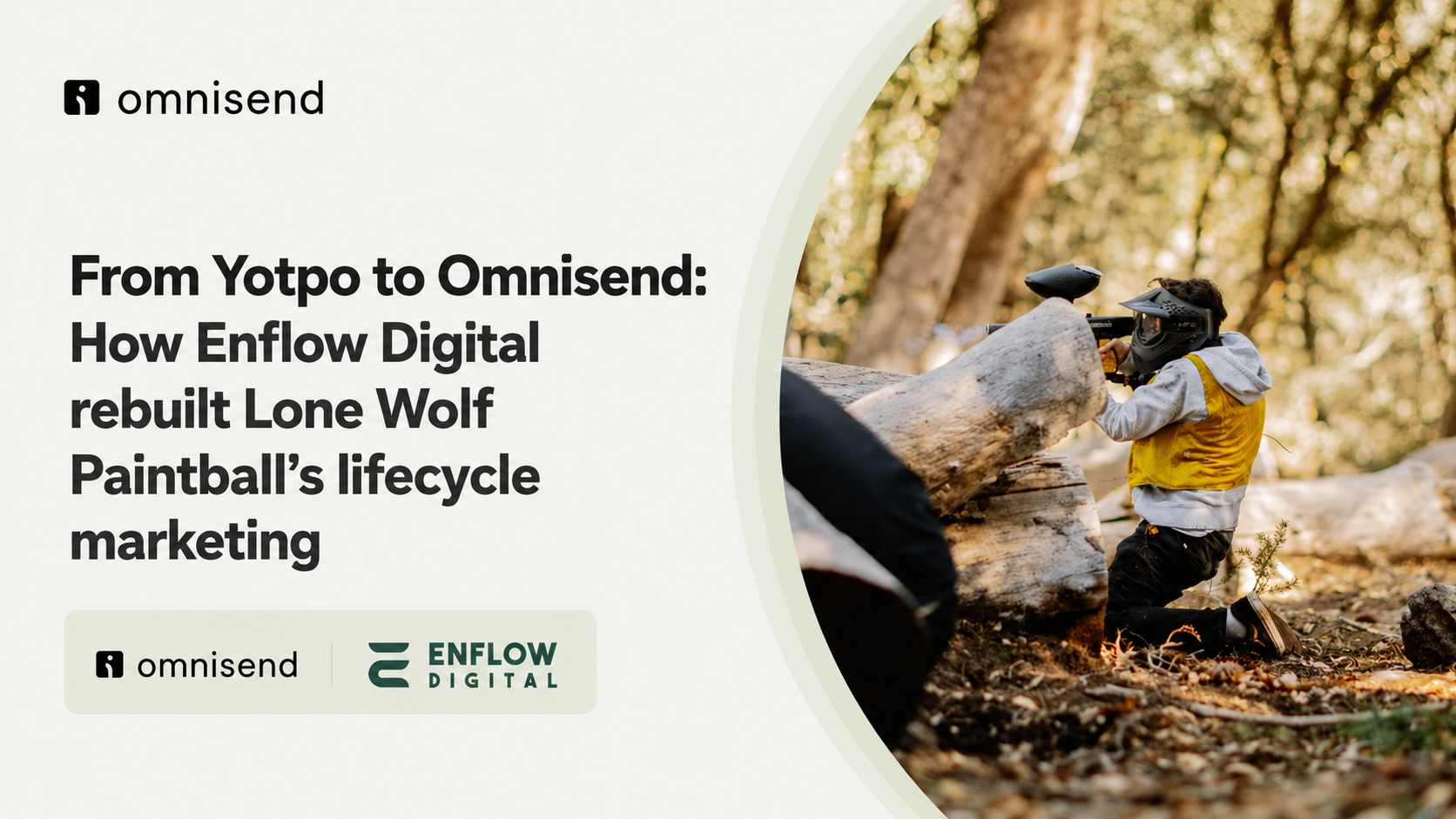
A loyal customer base, a healthy Shopify store, and an email program that was mostly just sitting there.
They moved from Yotpo to Omnisend with Enflow Digital and rebuilt the lifecycle properly, pulling email, SMS, loyalty messaging, and automations into one place for the first time.
Same audience, very different results:
- Automations drove 20% of total store revenue in month one
- Abandonment flows recovered 3.5x more shoppers than the Shopify default
- Email reached 28% of total revenue by month three
*Sponsored
Samsonite is buying most of BÉIS

Samsonite is picking up an 85% stake in BÉIS for $178.5 million in cash, with the deal expected to close in Q4. Shay Mitchell founded the brand in 2018, it did roughly $210 million in revenue last year, it's already profitable, and lifestyle bags account for close to half of sales. Mitchell keeps 15% and stays on as creative and design director, and the existing team keeps running it independently.
AG1 is turning one powder into a whole shelf
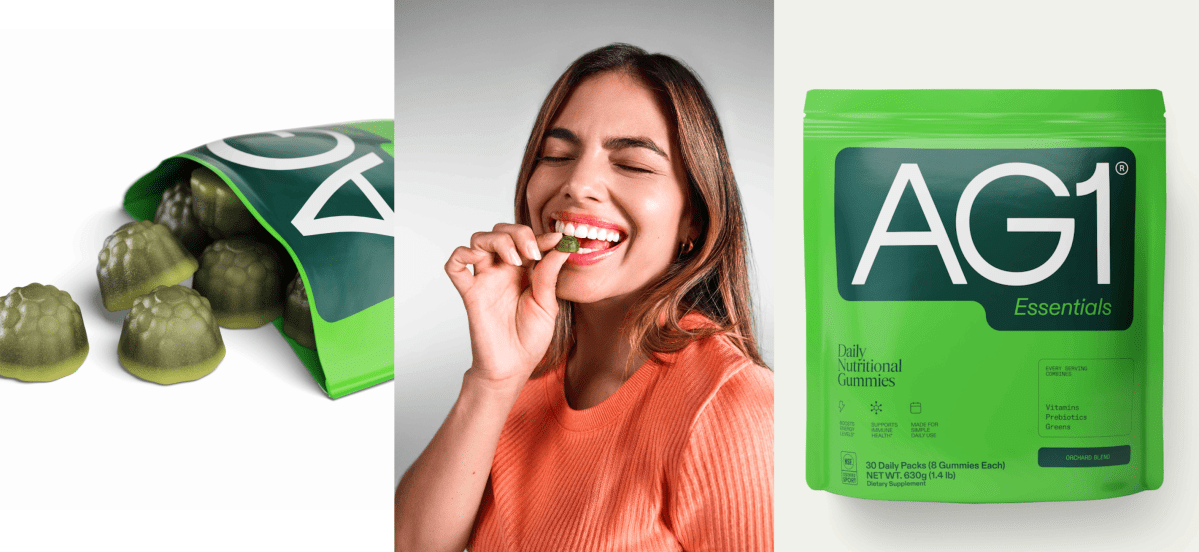
AG1 shipped a Pro formula with creatine in June, launched essential gummies this month, and has an energy powder landing late August, with a canned ready-to-drink option slated for next year. CEO Kat Cole says to expect several launches a year. The gummy move is the interesting one: gummies are a quarter of the supplement market and fewer than 10% of AG1's existing customers currently buy them.
Back to school is up on paper and thinner in the cart
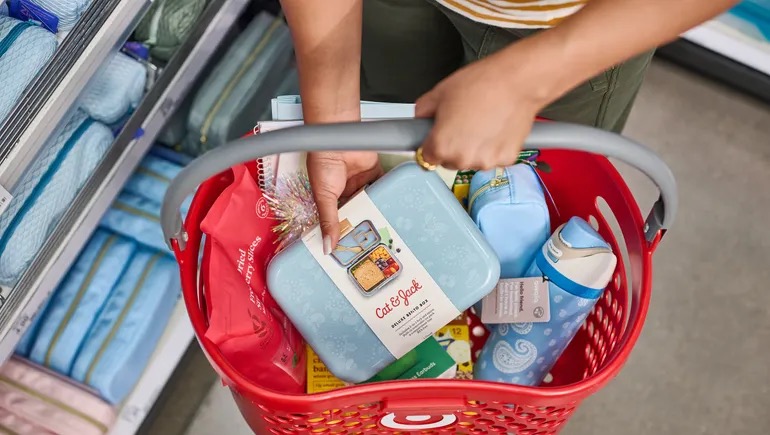
The NRF has K-12 back-to-school spending at a record $43.3 billion, up from $39.4 billion last year, but Circana's read on actual sales is less cheerful. Retail revenue fell 1% year over year in July, discretionary general merchandise dropped 4.3% in the four weeks to Aug 1, and kids' apparel is expected to slide 1 to 2% this quarter. Forty percent of parents say they're feeling more financial stress than last year, and 45% of households plan to use buy now, pay later, up from 39%.
Reply